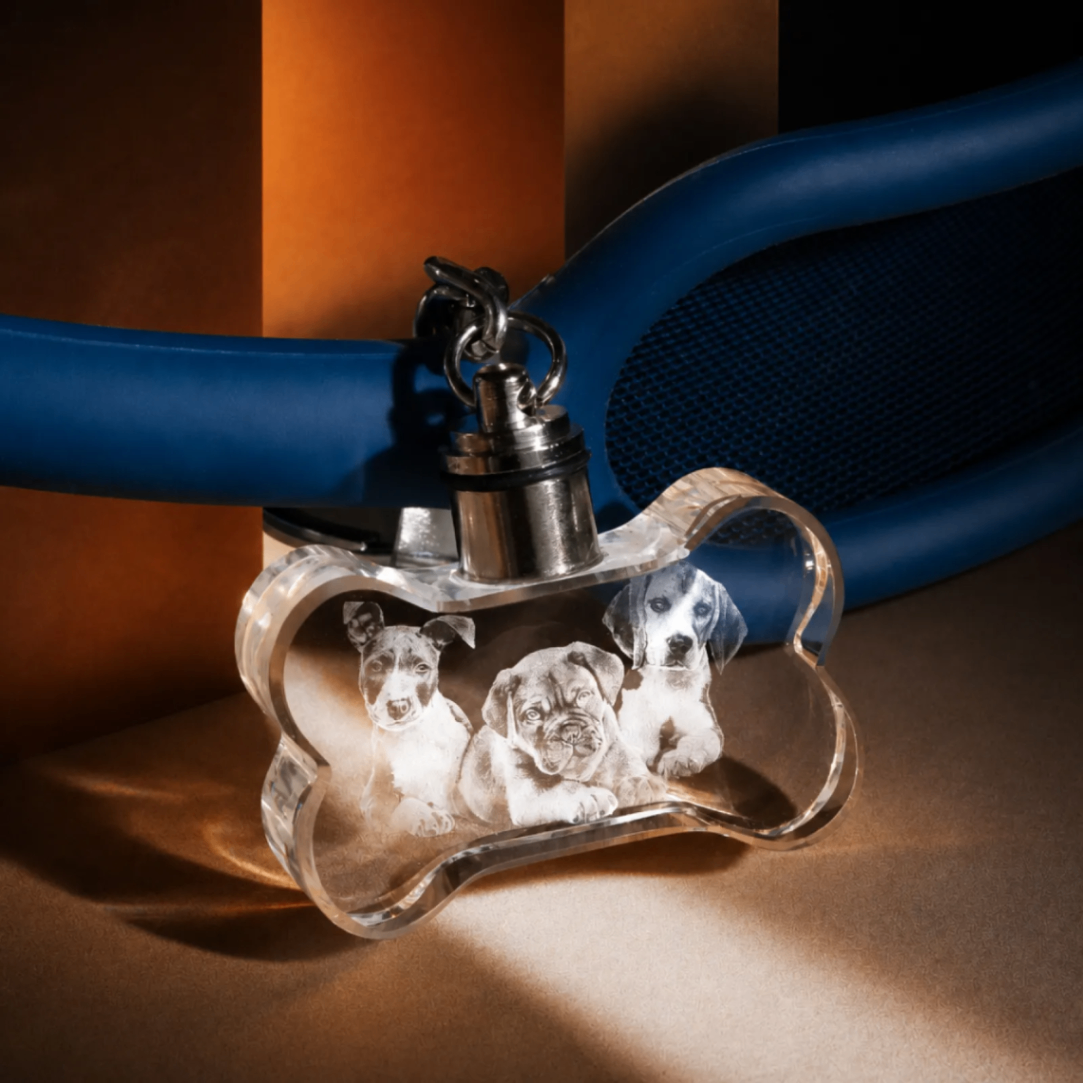
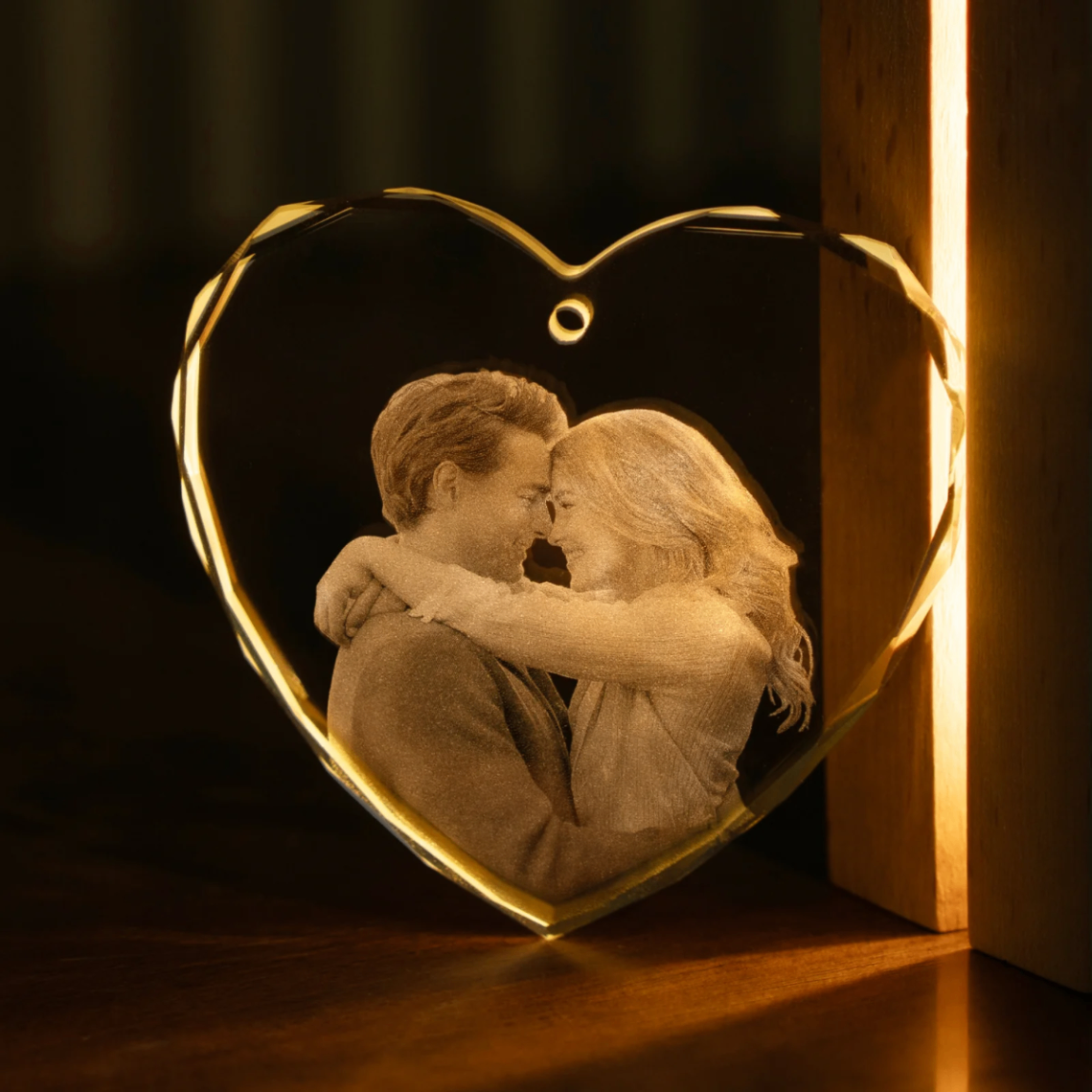
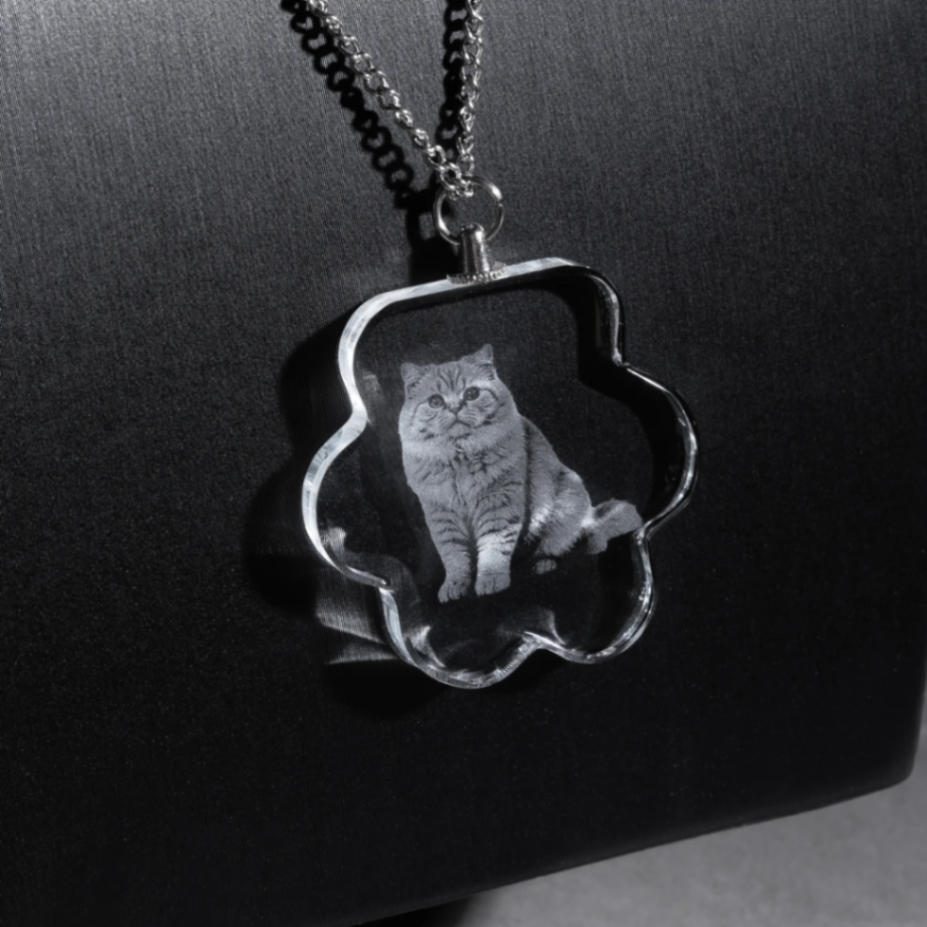
Introduction
You've likely run into this: two clear glass blanks that look identical, one labeled "K9 crystal" at $79.99, the other "high-clarity glass" at $7.99. Side by side on a table, they're nearly indistinguishable — until you run internal (3D) engraving. The K9 piece comes out clean, sharp, and three-dimensional; the other turns hazy and gray, or cracks from the inside.
So what's the difference? And why can the price vary 10-fold?
This article answers three questions:
- How many grades of glass are on the market, and which measurable specs actually separate them;
- Which glass is suitable for laser engraving;
- What processes an xTool Selected crystal blank goes through.
Glass Grade Comparison Chart
Dimension | K9 Crystal Glass | K5 Crystal Glass | Regular Soda-Lime Glass |
|---|---|---|---|
Main composition | SiO₂-B₂O₃-K₂O-BaO | SiO₂ + K₂O, low or no boron | SiO₂ ≈72% + Na₂O + CaO |
Refractive index (nd) | ≈1.5168 | ≈1.52 | ≈1.51–1.52 |
Typical Fe₂O₃ content | ≤0.01% | ≈0.02%–0.06% | ≈0.08%–0.15% |
Bubble grade | Virtually bubble-free to the naked eye in normal batches | A few micro-bubbles allowed, visible on close inspection | No optical-grade requirement; visible bubbles and stones are common |
Cross-section color | Colorless and clear, with a white sheen at the cut edge | Slight green or yellow tint | Distinctly green |
Suitable for internal engraving | Top choice for internal engraving: bright white dot bursts, sharp point clouds, high clarity | Workable, but dot brightness and clarity are average, with occasional impurities | Not recommended: impurities scatter the beam, causing gray dot bursts and cascading cracks |
Surface engraving performance | Highest whiteness, strongest contrast, clean edges — ideal for fine detail | Good whiteness, moderate contrast | Produces a white frosted effect, but the greenish base tone lowers contrast |
Processing difficulty | High: greater hardness (Mohs ≈6) means more cutting, polishing, and beveling steps — raising both cost and yield loss | Medium: more cold-working steps than regular glass | Low: soft material, easy to cut and heat-bend, lowest cost |
After the comparison: why K9 glass costs more
- So pure there's nothing to spot. Hold ordinary glass up to the light and you'll often see tiny bubbles and specks; K9 is melted and left to settle far longer, purging every bubble. Every piece you receive is clear all the way through.
- No green tint. Viewed from the side, ordinary glass looks greenish — that's iron impurities. K9 uses low-iron raw material, so it stays colorless and clear from any angle, only showing the fire and sparkle of true crystal under light.
- Best suited for internal engraving: uneven stirring during melting can leave "striae" (schlieren) — streaks of inconsistent refractive index inside the material. They're invisible to the eye, but they deflect the laser's focal point, causing dot depth to vary across different areas of the same image.
- Every facet is hand-ground. K9 is much harder than ordinary glass, so cutting, grinding, and polishing happen step by step, by hand — not stamped out by a mold.
What Kind of Glass Is Suitable for Laser Engraving?
Glass only absorbs CO₂ and UV light — blue and infrared pass straight through clear glass. That doesn't mean blue/infrared can't engrave glass; it just means the glass needs to be "colored" first so it can absorb the laser. Internal engraving works by focusing the laser precisely inside the material, so any bubble, impurity, or striation blocks the light path. That's why K5's internal-engraving results are inconsistent, while K9 — purer, with no bubbles or striae — is best suited for it.
Glass Type | Surface Engraving | Internal Engraving | Compatible Light Source |
|---|---|---|---|
Regular glass | ✅ | ❌ | Surface engraving: CO₂ / UV; blue/infrared needs coating assist |
✅ Requires rotary attachment | ❌ | Surface engraving: CO₂ / UV; blue/infrared needs coating assist | |
✅ | ✅ | Surface engraving: CO₂ / UV; blue/infrared needs coating assist Internal engraving: F2 Ultra UV | |
✅ | ✅ | Surface engraving: CO₂ / UV; diode/infrared needs coating assist Internal engraving: F2 Ultra UV | |
Tempered glass | ❌ Can shatter spontaneously | ❌ | ⚠️ Not engravable |
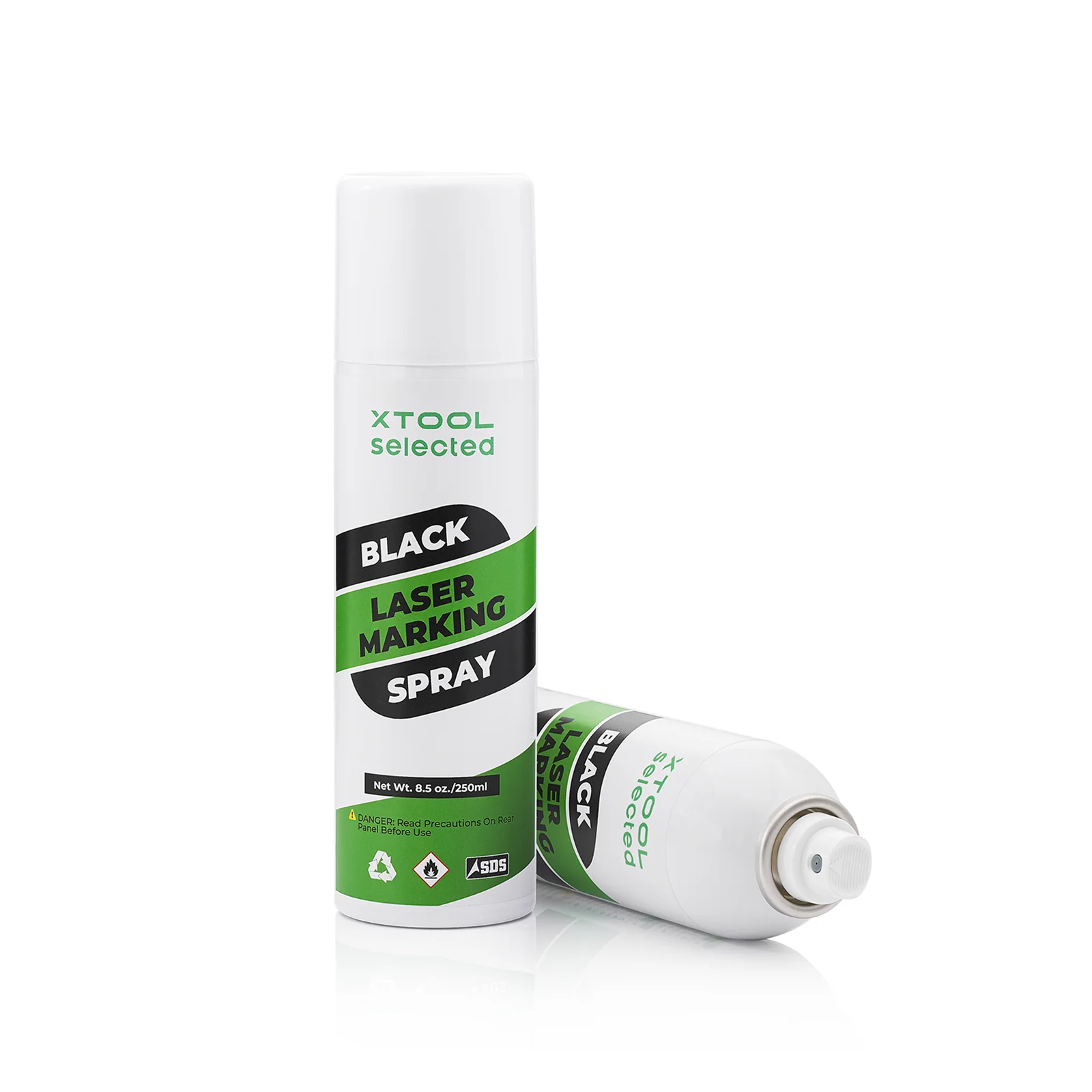
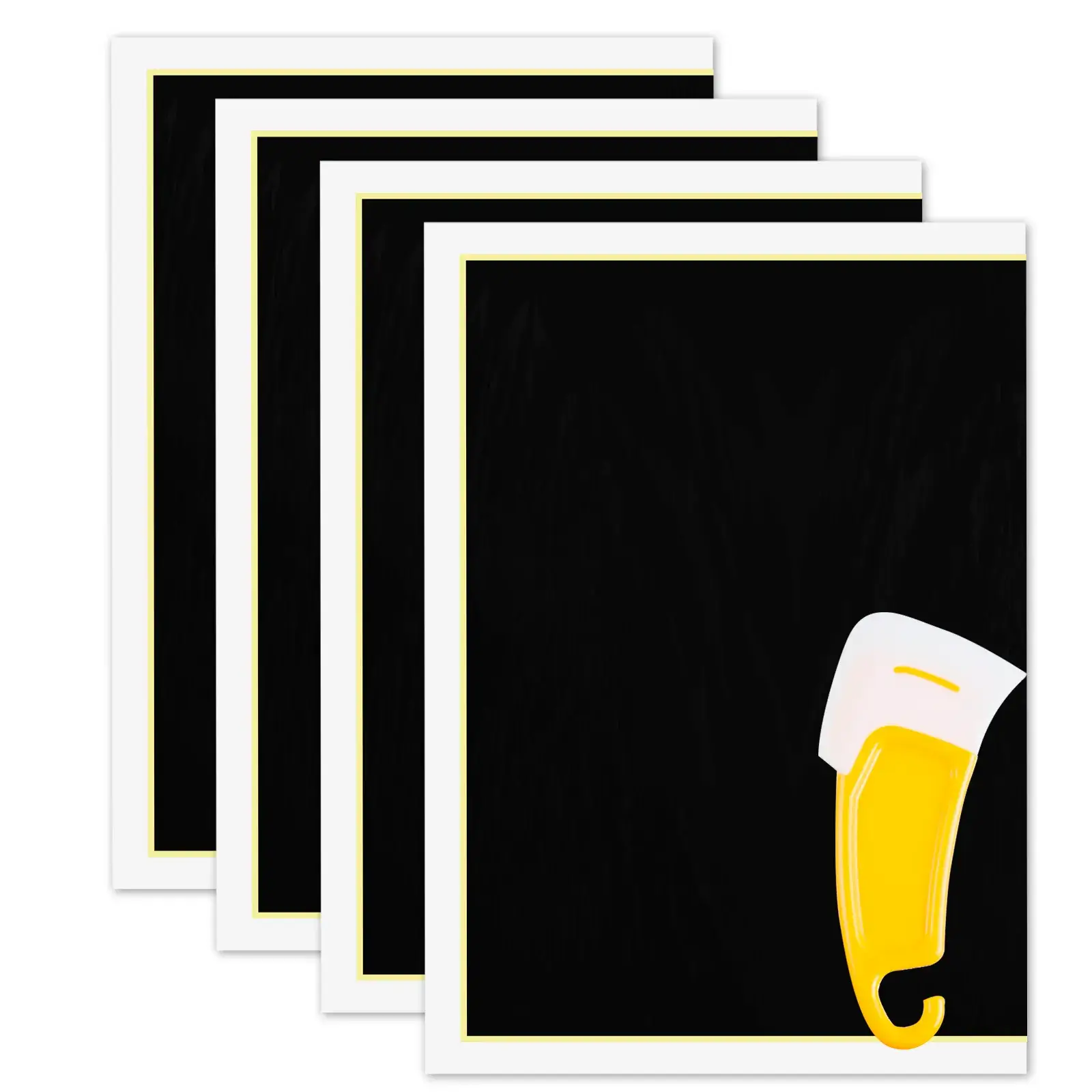
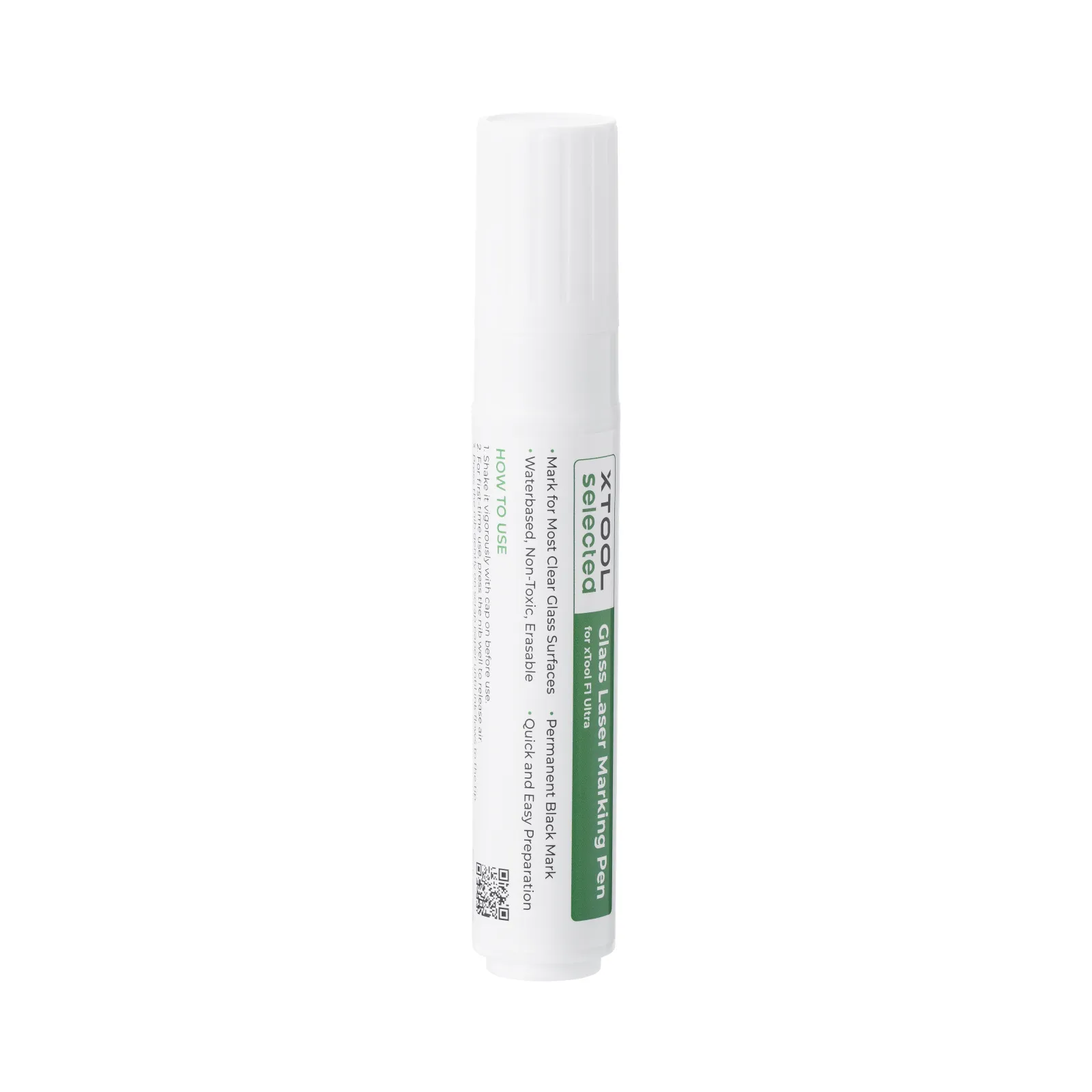
If you only have a blue or infrared laser engraver at hand, you can use these coating aids:
|
|
|
Behind the Scenes: How xTool Selected K9 Crystal Is Made, From Melt to Warehouse
Full process: Batching → Melting → Forming (casting/molding) → Precision annealing → Cutting → Rough/fine grinding → Faceting/beveling → Polishing → Cleaning & final inspection
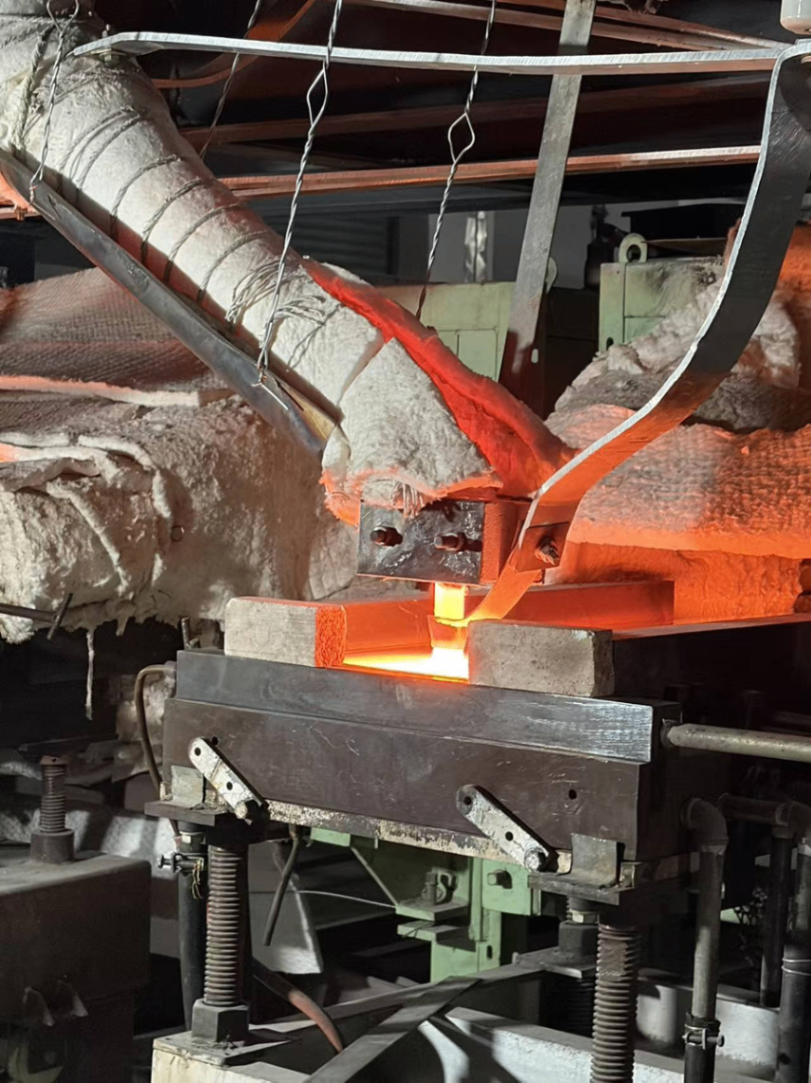
- Melting – Forming – Annealing
Melting: Raw materials such as quartz sand and borax are melted into a homogeneous glass liquid in a high-temperature furnace, then clarified and stirred over an extended period to expel bubbles and eliminate striae.
Forming: The molten glass is poured into molds and cast into rough blanks.
Annealing: The blanks then enter an annealing kiln, where they're cooled to the annealing temperature and held there to fully release internal stress, then slow-cooled at a tightly controlled rate to ensure the material is uniform throughout with no residual stress.
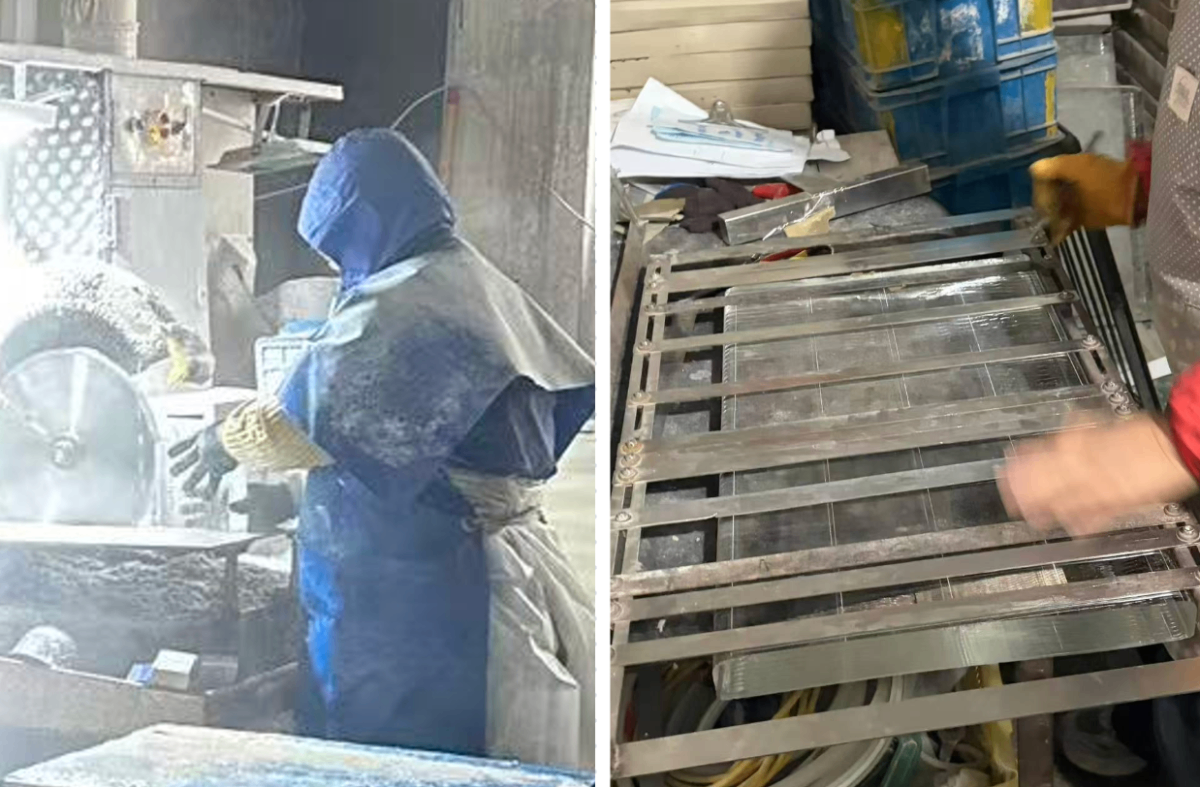
- Cutting
Wet-cut with diamond saw blades to size the blanks to spec, while avoiding excess heat and chipping.
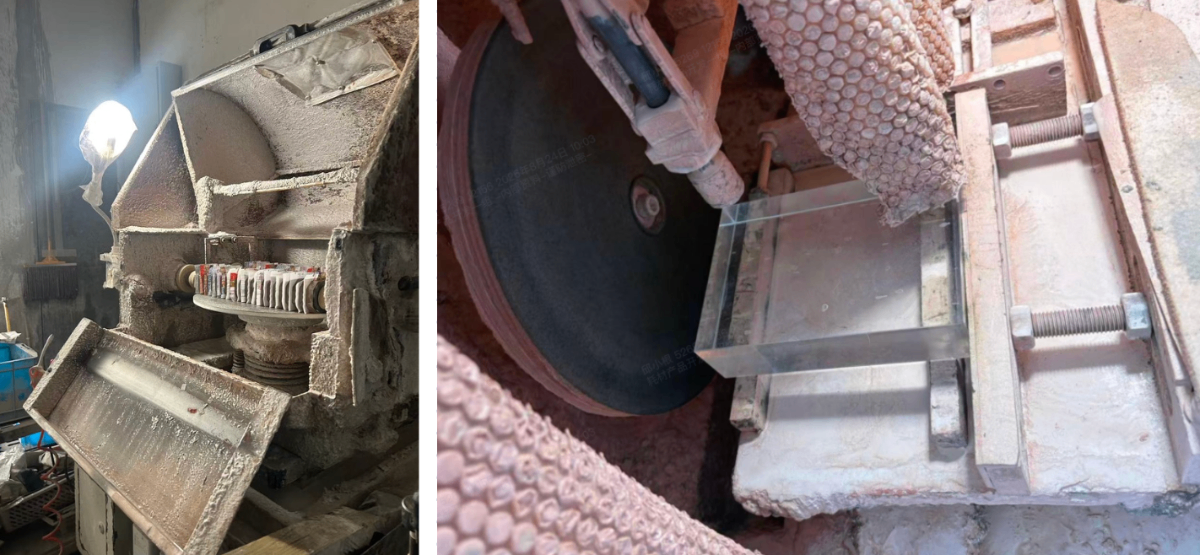
- Rough Grinding / Fine Grinding
Rough grinding: Coarse abrasives quickly remove saw marks and excess material, bringing the blank close to its target dimensions.
Fine grinding: Progressively finer abrasives refine the surface into flat, precise facets, preparing it for polishing.
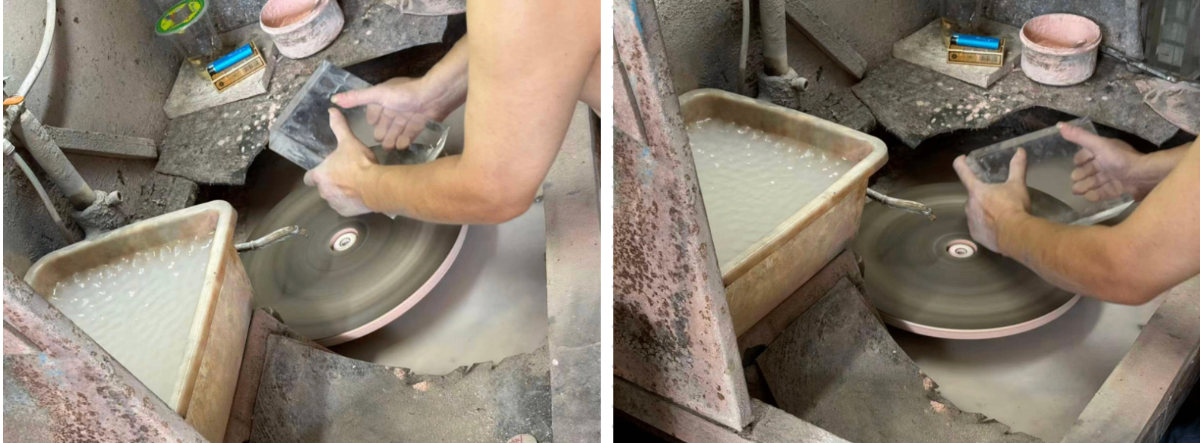
- Faceting / Beveling
Facets and edge lines are ground into the blank so light refracts into brilliant fire; edges are then beveled to prevent chipping and sharp corners.
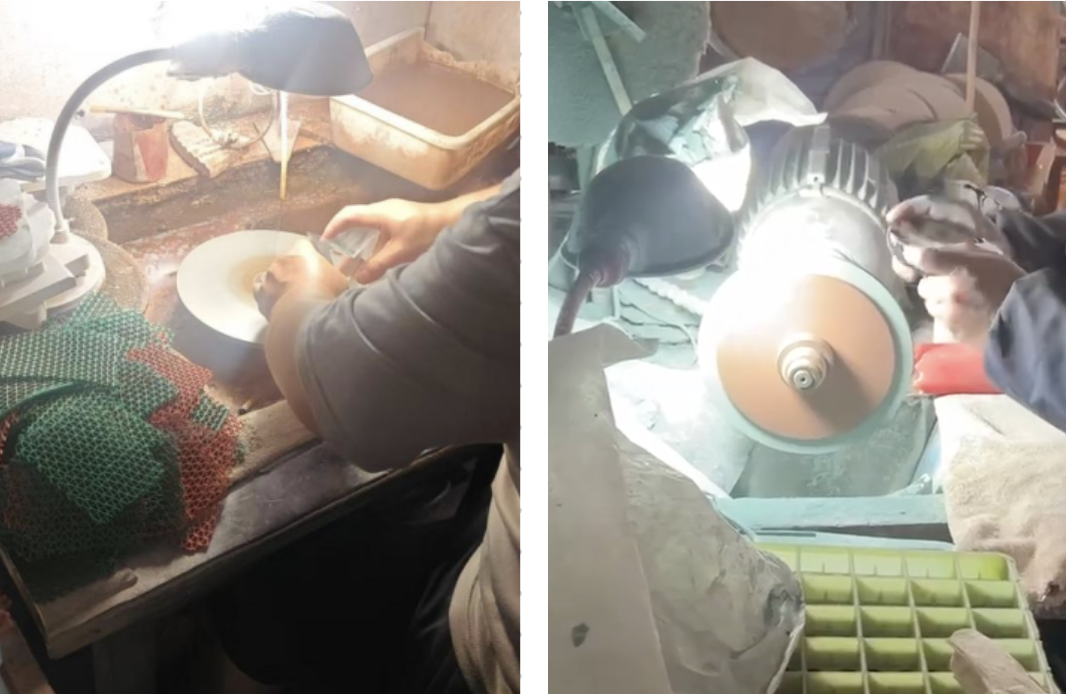
- Polishing
Cerium oxide polishing compound brings the ground surfaces to an optical-grade mirror finish — this is the step where the crystal's clarity truly comes through.
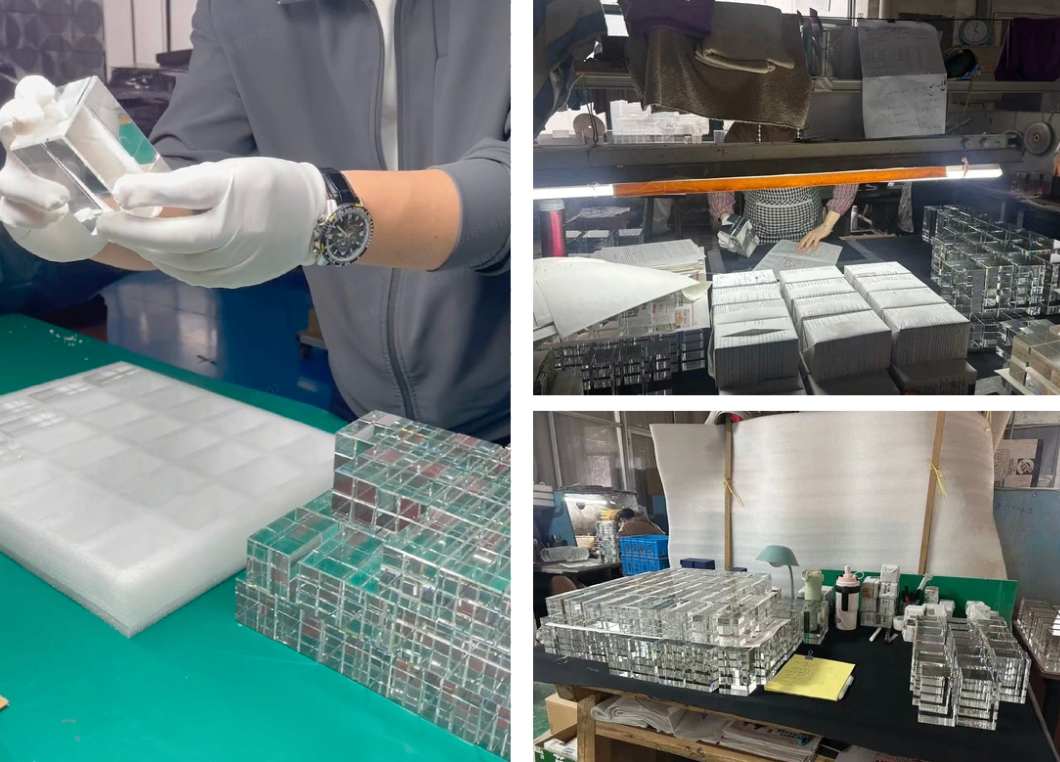
- Final Inspection
Every piece is inspected individually for appearance, dimensions, and internal clarity before qualifying units are packaged for shipment.
Meet the xTool Selected K5 & K9 Crystal Family
01 — Essentials
Easy to start.
|
|
|
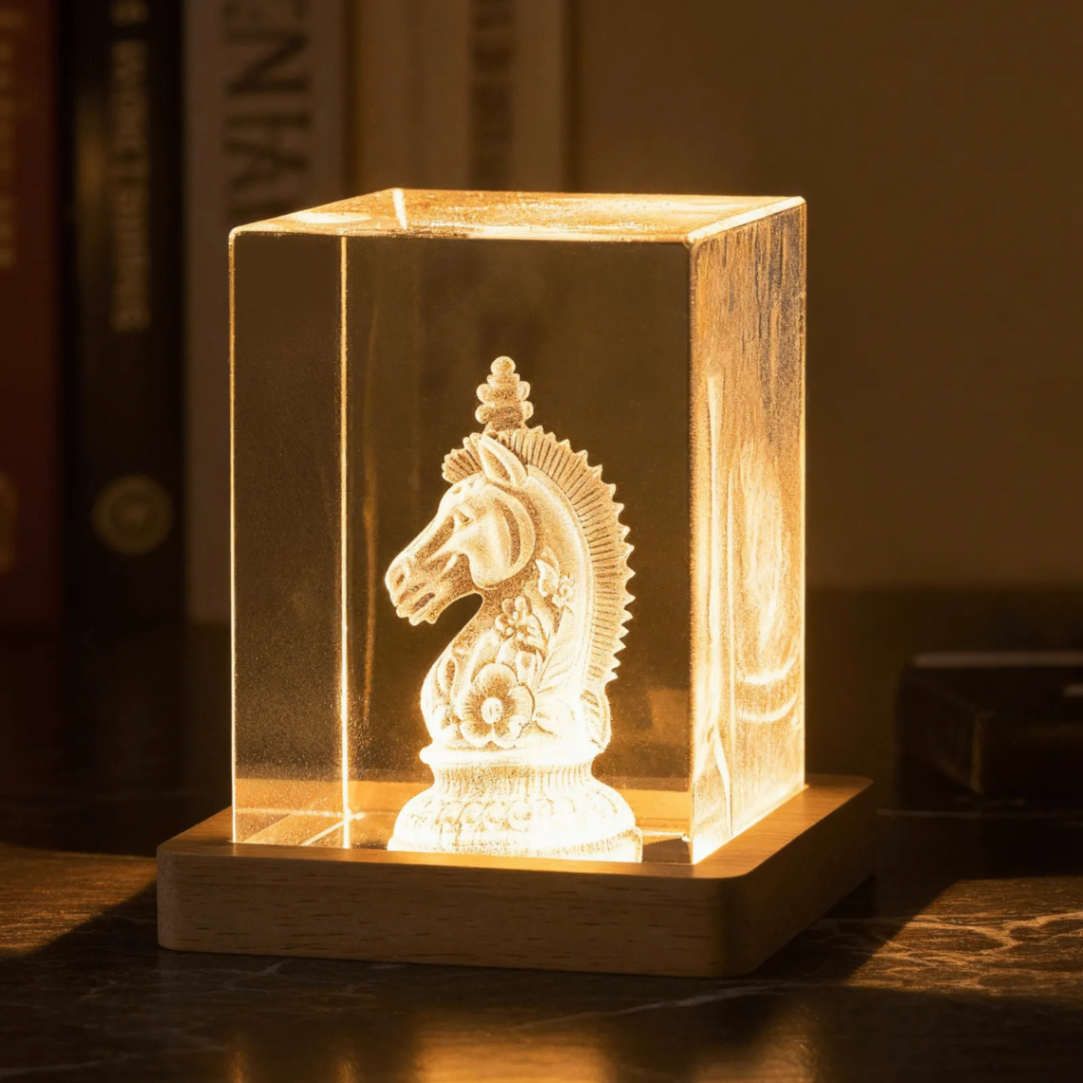
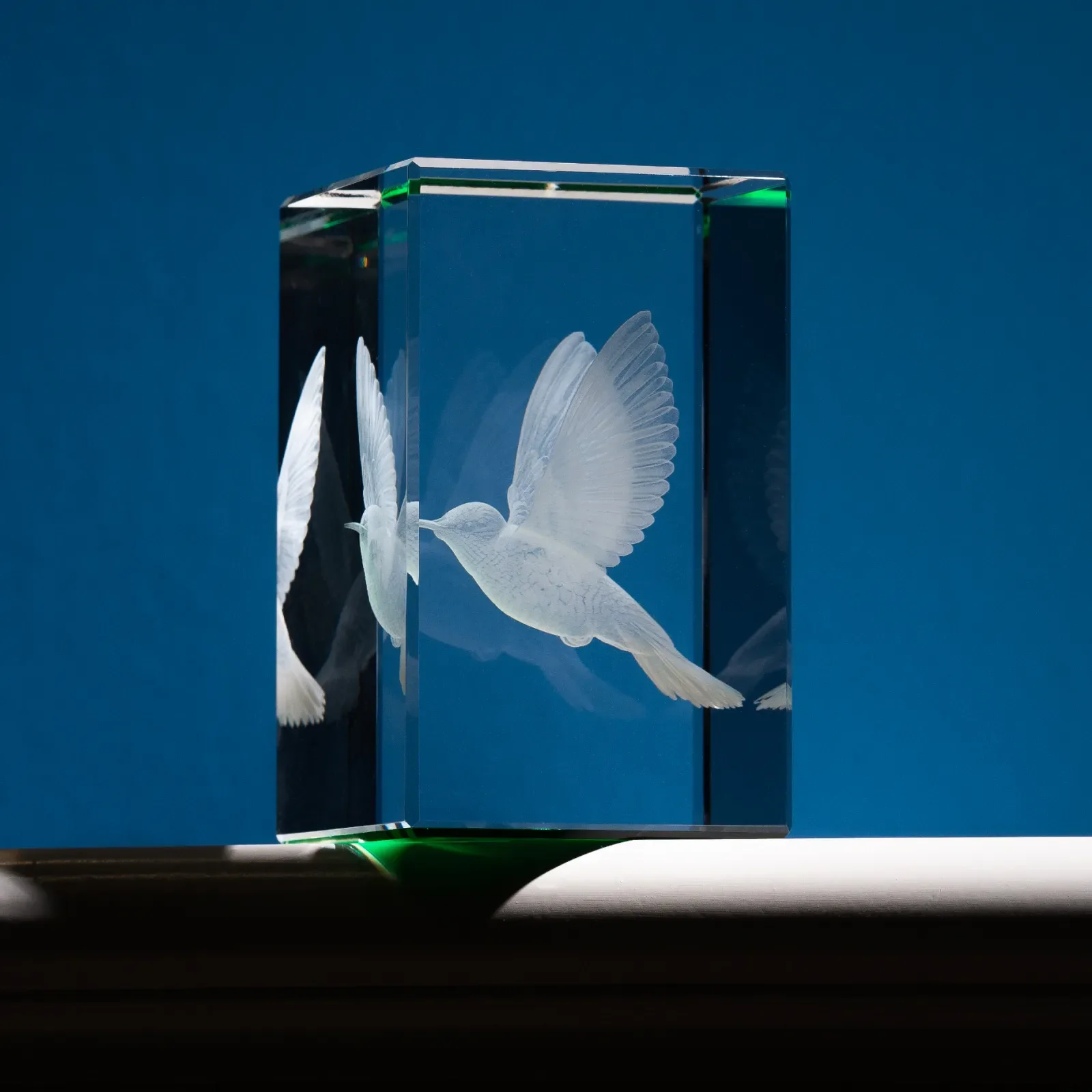
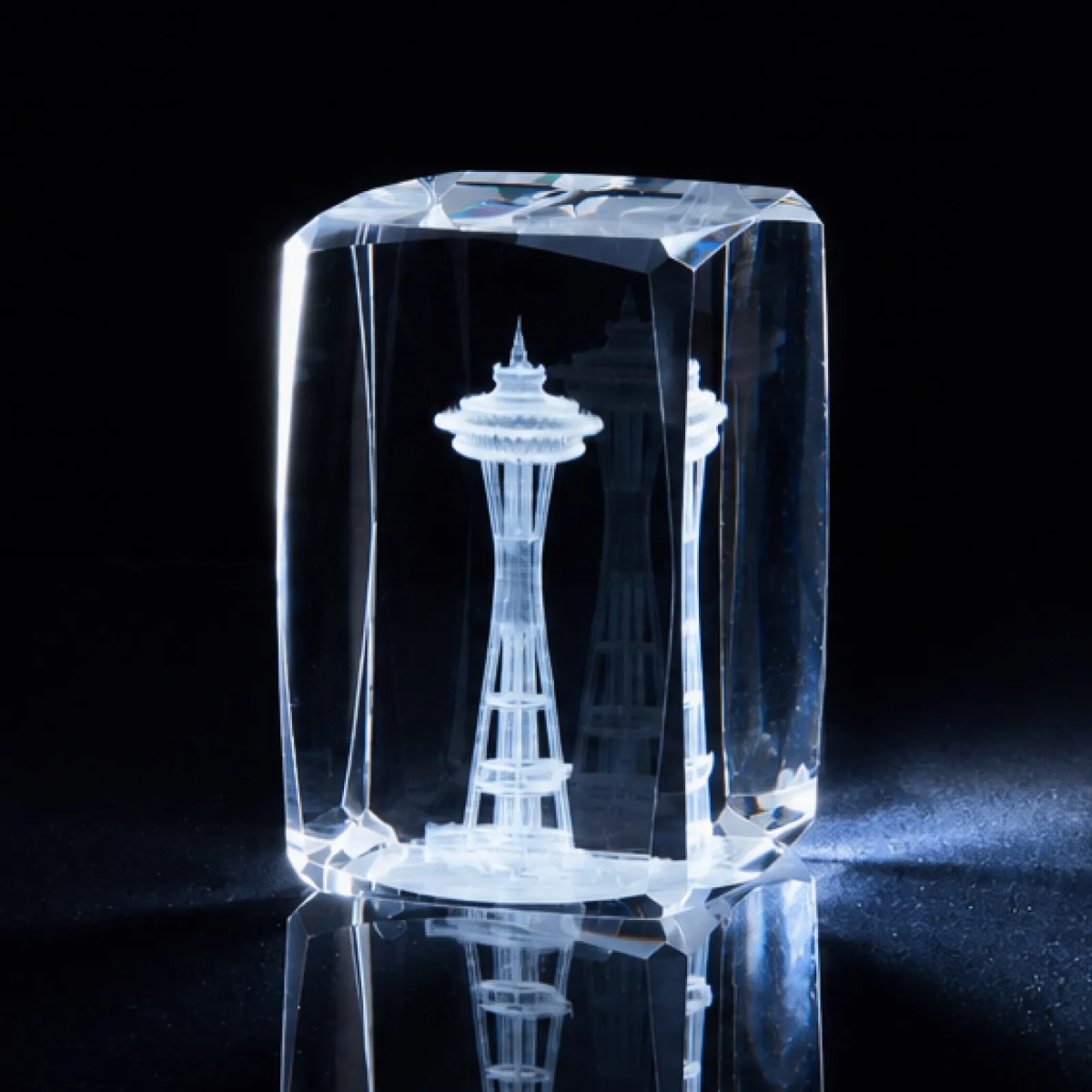
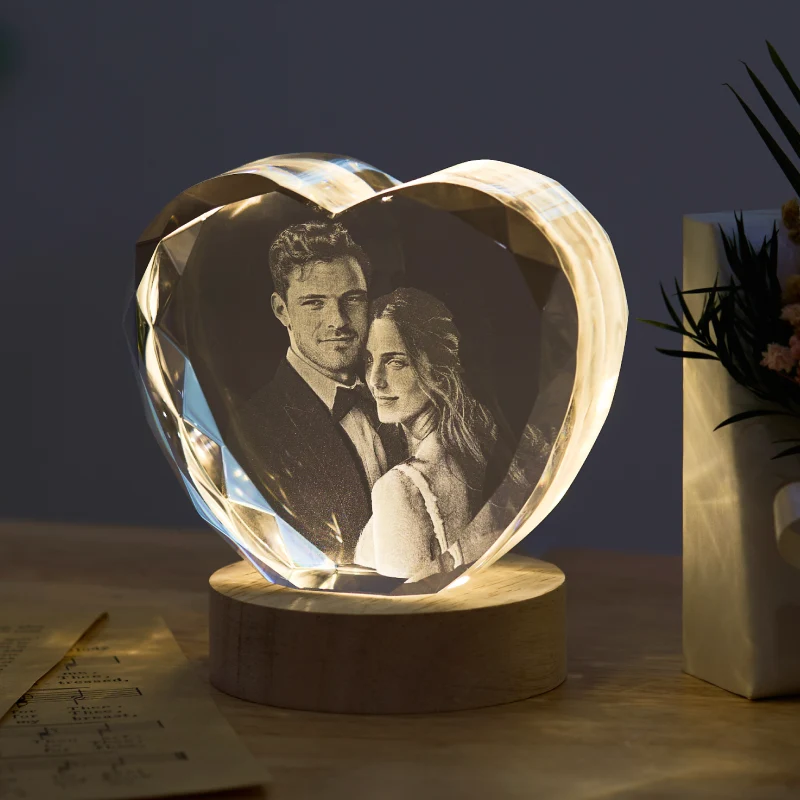
02 — Advanced
Unique shapes. More challenging, more distinctive.
|
|
|
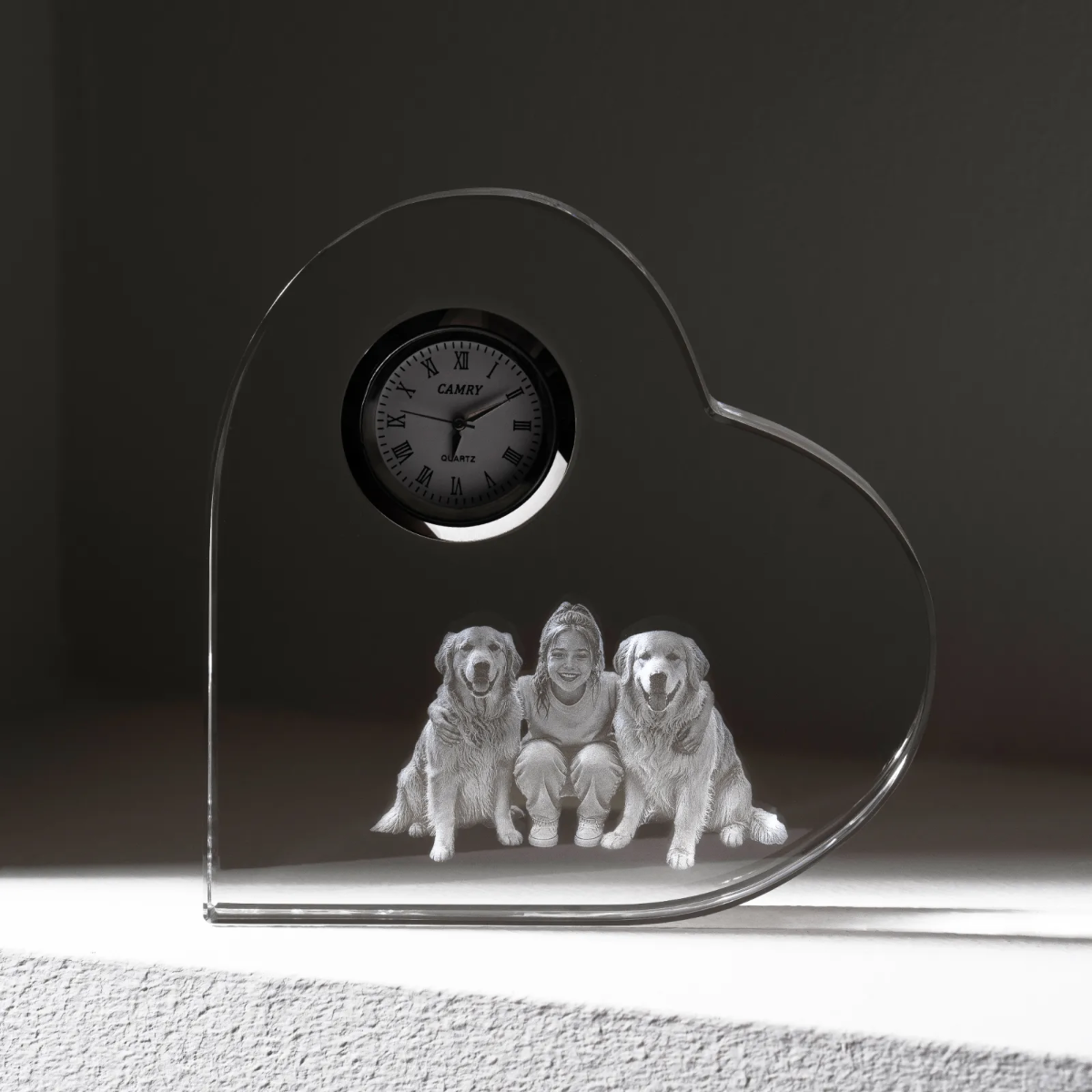
03 — Everyday
Functional designs for everyday use.
|
|
|
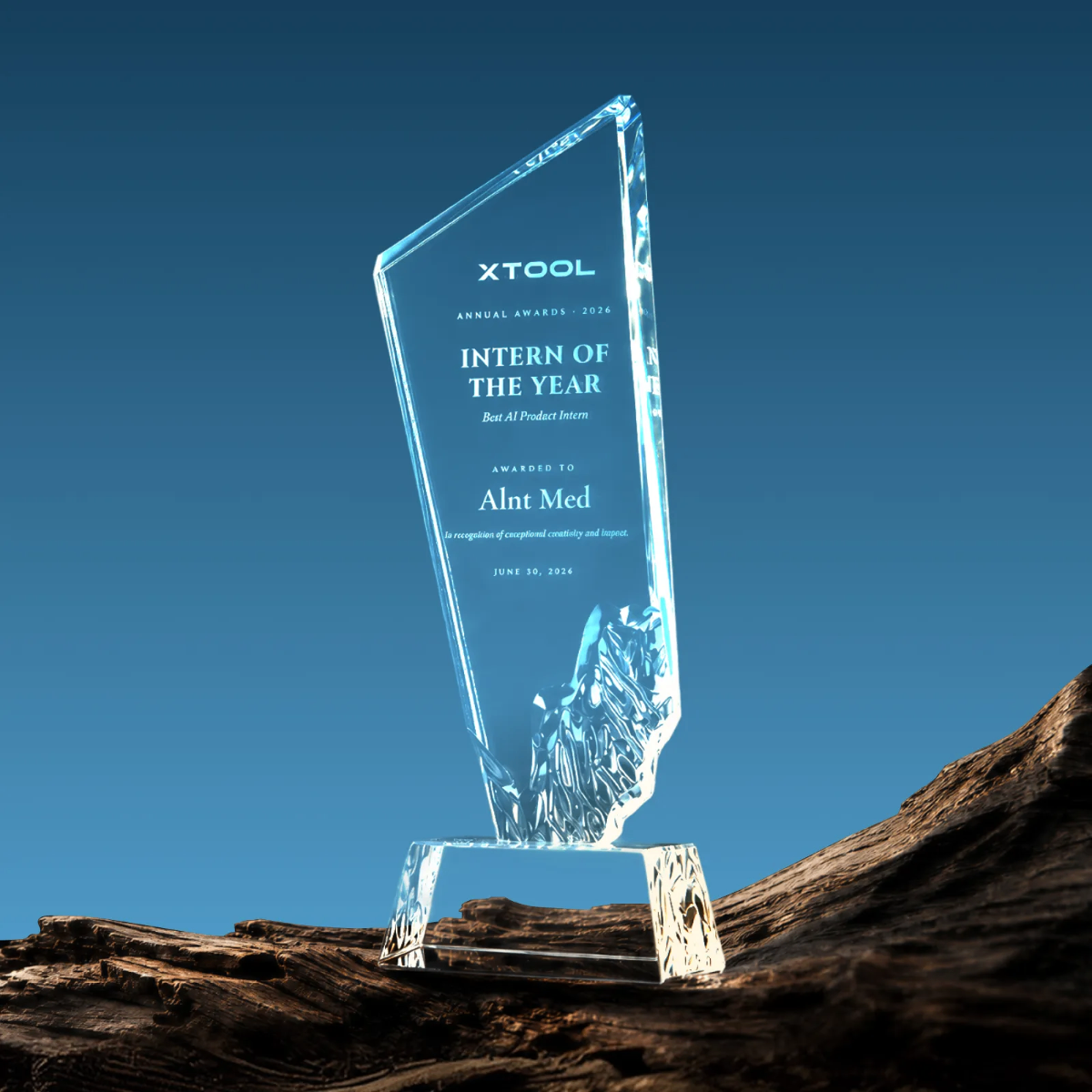
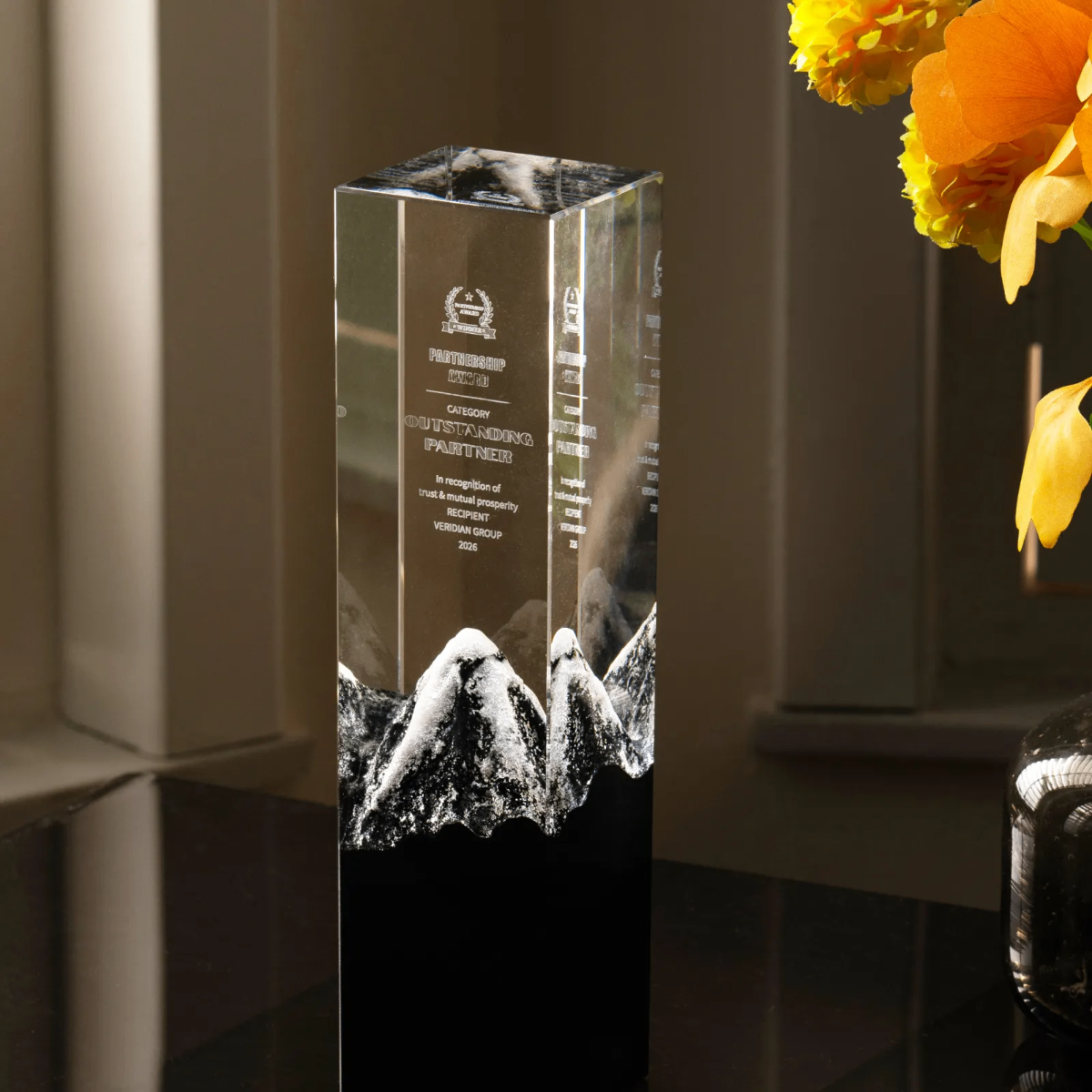
04 — Trophies
Made for schools, businesses, and custom awards.
|
|
|

05 — Decor
Small pieces that add a personal touch.
|
|
|