xTool F1/F1 Lite can be used with rotary attachment 2 (RA2) to process cylindrical materials. With Rotary Attachment 2 Pro, spherical and irregular materials can also be processed.
Note:
- Rotary attachments are not included with xTool F1 / F1 Lite. Purchase the accessory separately if needed.
- RA2 and RA2 Pro follow the same operating workflow.
1. Set up the rotary attachment
RA2 Pro supports Roller mode and Chuck mode, while RA2 supports only the Roller mode.
Assemble and set up the rotary attachment according to the selected working mode.
- If you use the Roller mode, set the rotary attachment to A, B, or C level.
Level A | Level B | Level C |
|---|---|---|
Diameter of material: 3 mm ≤ d ≤ 50 mm | Diameter of material: 45 mm ≤ d ≤ 60 mm | Diameter of material: d > 60 mm |
- If you use the Chuck mode, install jaw chuck components and jaw components as required.
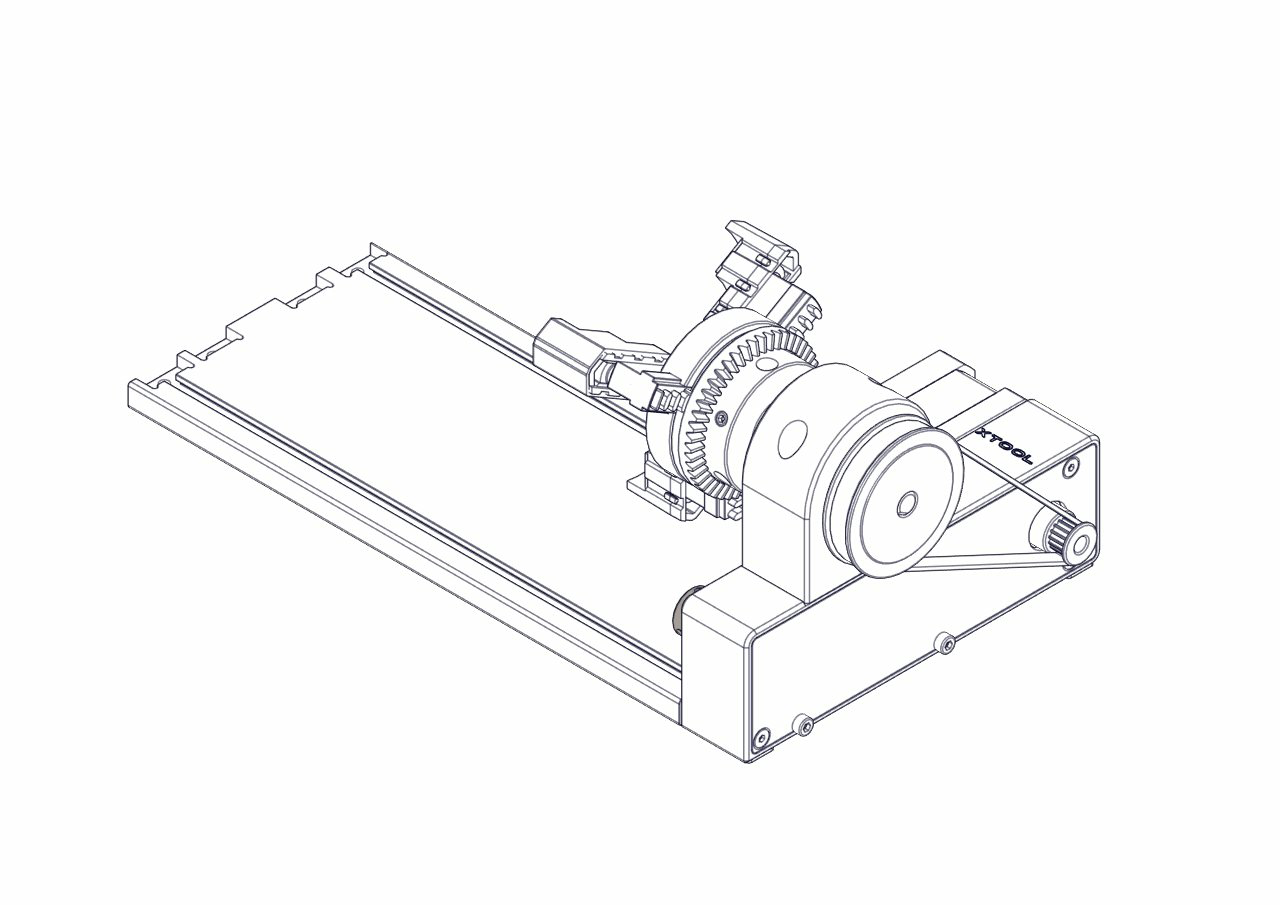
Note: For detailed information and instructions on how to use RA2, see User Manual for Rotary Attachment 2 (RA2).
2. Connect the rotary attachment to xTool F1/F1 Lite
(1) Use the connection cable to connect the rotary attachment to xTool F1/F1 Lite.
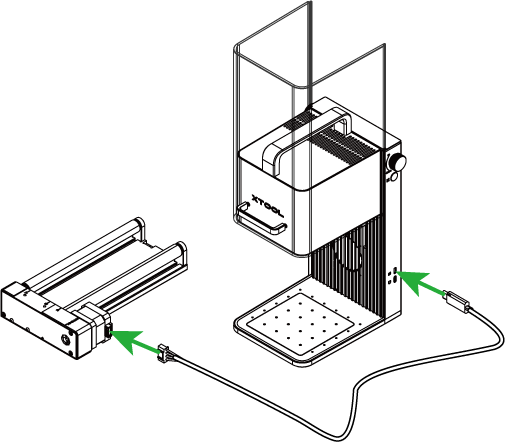
Note: If the connection cable included in the rotary attachment pack is incompatible with xTool F1/F1 Lite, please purchase a compatible one.
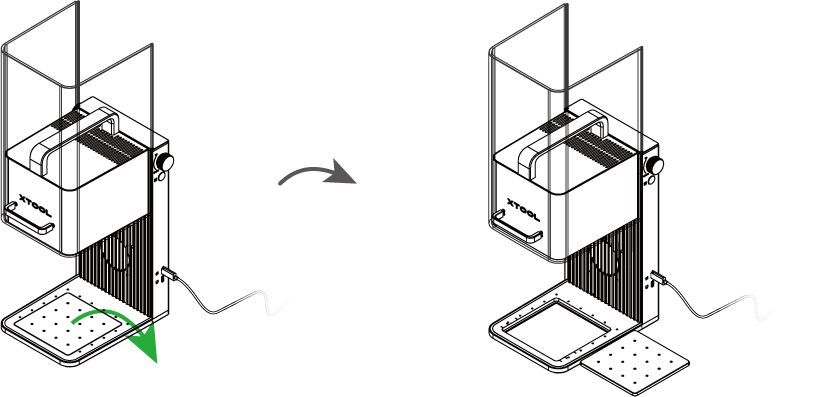
(2) Take out the removable baseplate and place it on the right side of the base of xTool F1/F1 Lite.
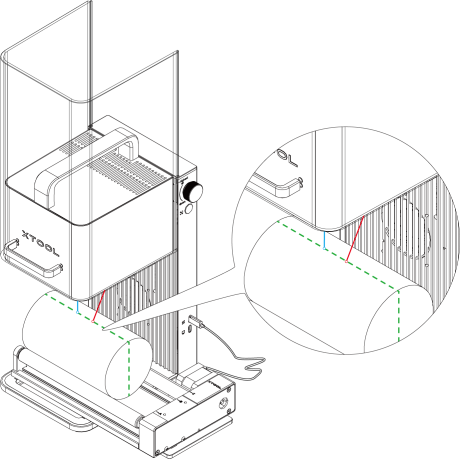
(3) Place the rotary attachment across the xTool F1/F1 Lite base and the removable baseplate. Depending on the working mode and level setting of the rotary attachment, align its front bottom edge with the corresponding marking lines on the xTool F1/F1 Lite base.
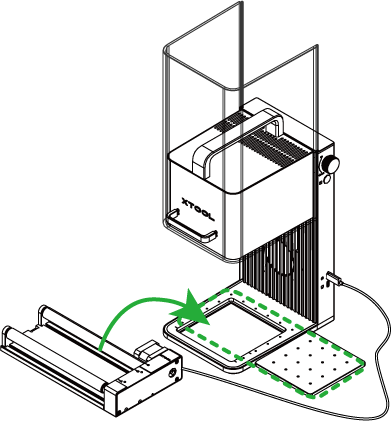
Note: There are three groups of marking lines on the base of xTool F1/F1 Lite.
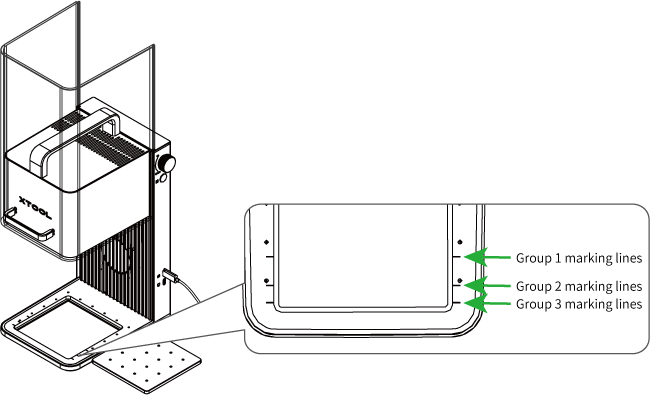
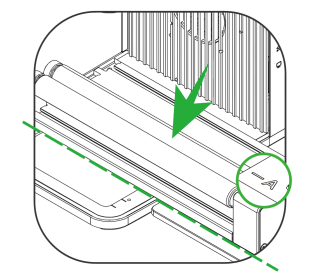
- Roller Mode – Level A: Align with Group 1 marking lines.
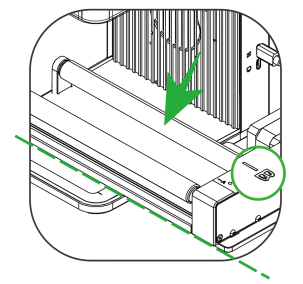
- Roller Mode – Level B: Align with Group 2 marking lines.
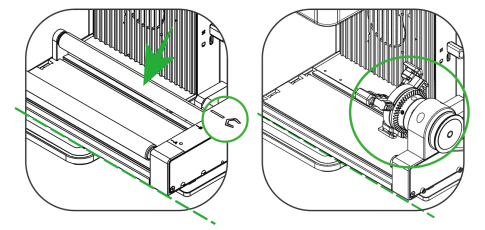
- Roller Mode – Level C or Chuck Mode: Align with Group 3 marking lines.
3. Start processing with xTool Studio
1. Place the material
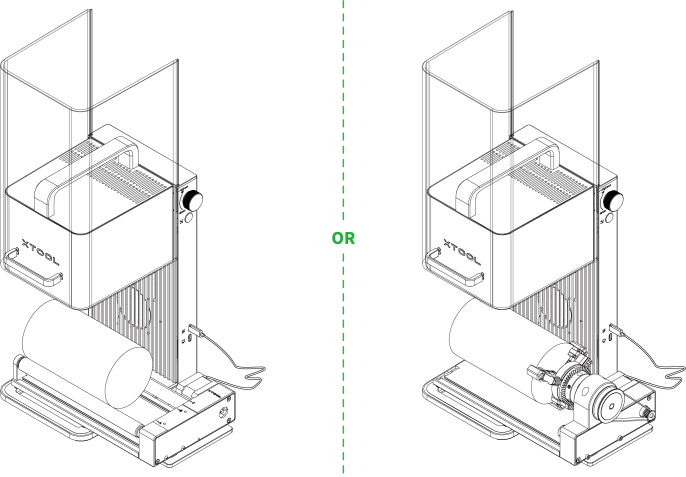
- If you use the rotary attachment in Roller mode, place the material between the two rollers.
- If you use the rotary attachment in Chuck mode, secure the material with the jaws.
2. Power on xTool F1/F1 Lite and connect it to xTool Studio
Refer to Connect and Set Up xTool F1/F1 Lite with xTool Studio for instructions on connecting xTool F1/F1 Lite to xTool Studio.
3. Select the processing mode and material
(1) In the right panel of the page, click the current processing mode, and then select Roller - Use rotary attachment or Chuck - Use rotary attachment.
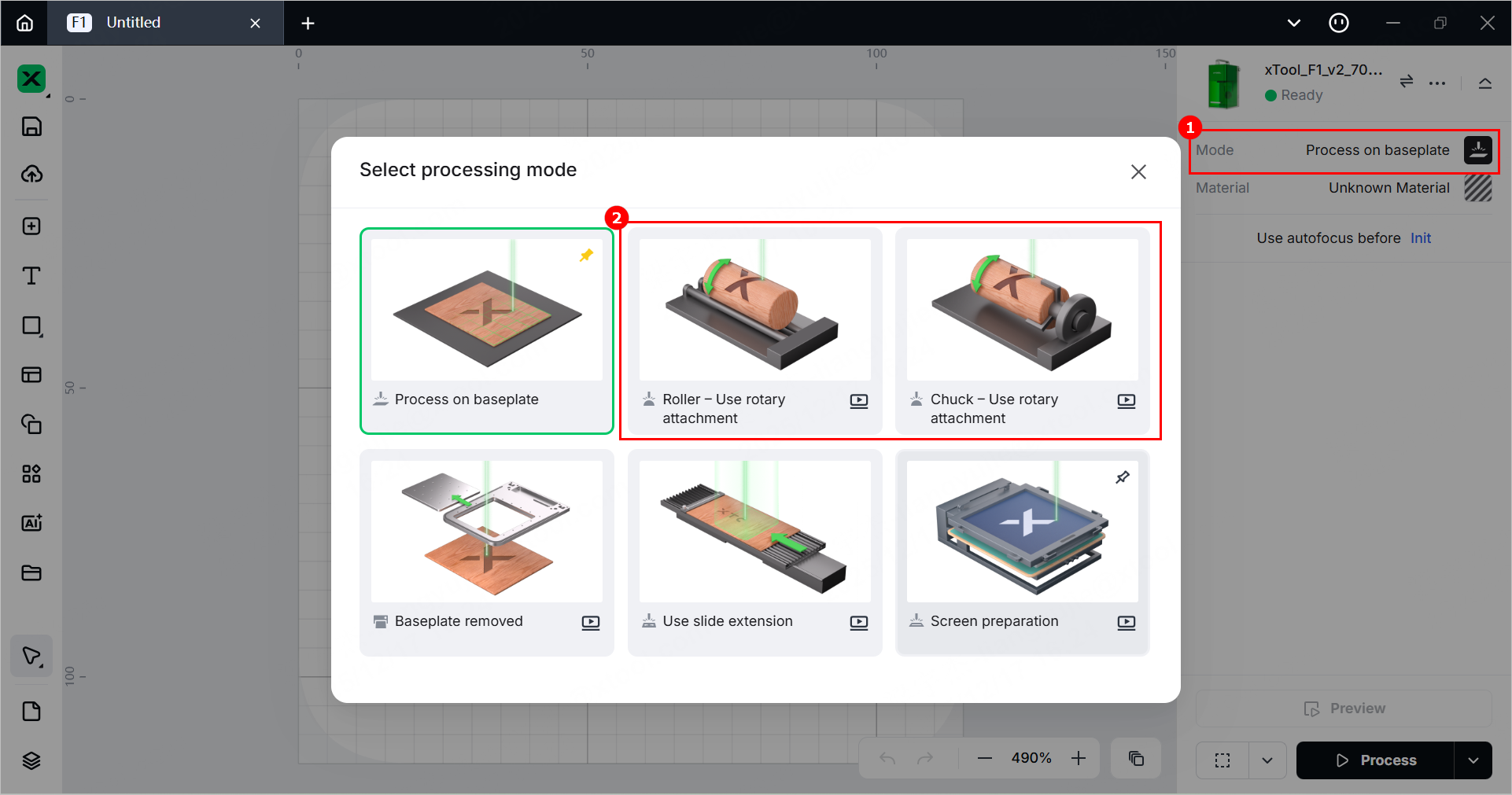
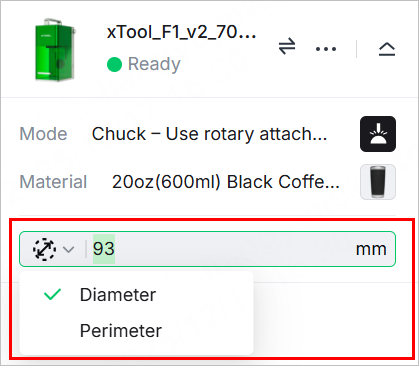
Note: If you select Chuck - Use rotary attachment, you need to enter the Perimeter or Diameter of the material.
(2) Click Unknown Material, select the desired material, and click Apply.
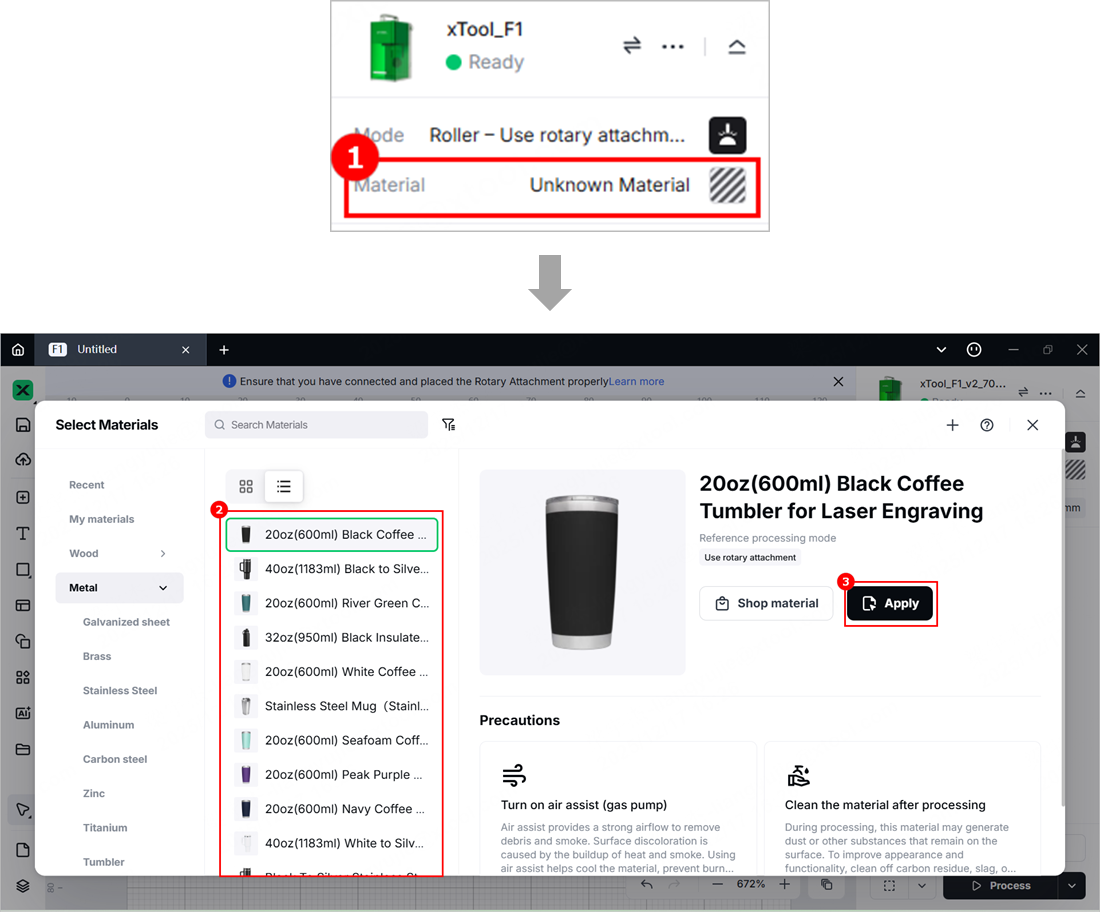
Note: After you select a material from the material list, the software will automatically set parameters for laser processing. The default settings apply to xTool materials. You can adjust the settings as required.
4. Set the laser focus
(1) Check whether the red and blue light spots are both on the top surface of the material.
- If not, follow the steps in "Connect the rotary attachment to xTool F1/F1 Lite" to readjust the position of the rotary attachment.
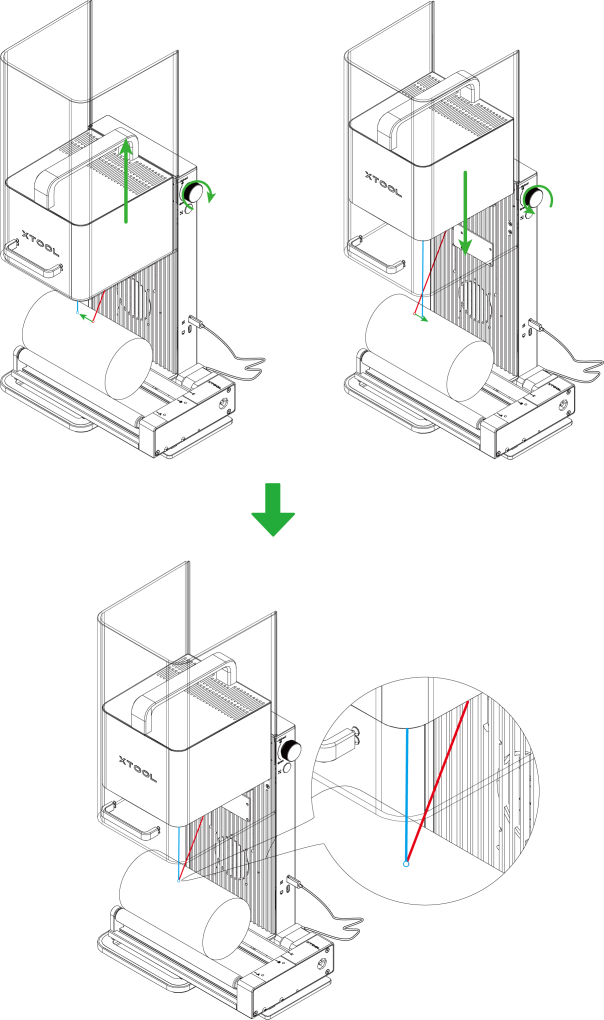
(2) Turn the knob to move the laser module up and down. When the red and blue light spots coincide, the focus is correctly set.
Note:
- If you turn the knob clockwise, the laser module will move up, and the red light spot will move toward the left.
- If you turn the knob counterclockwise, the laser module will move down, and the red light spot will move toward the right.
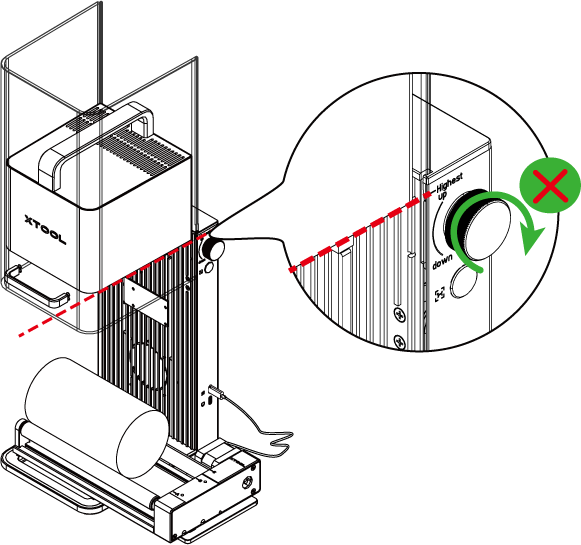
Note: When the bottom of the laser module reaches the highest point, stop turning the knob.
5. Design objects for processing
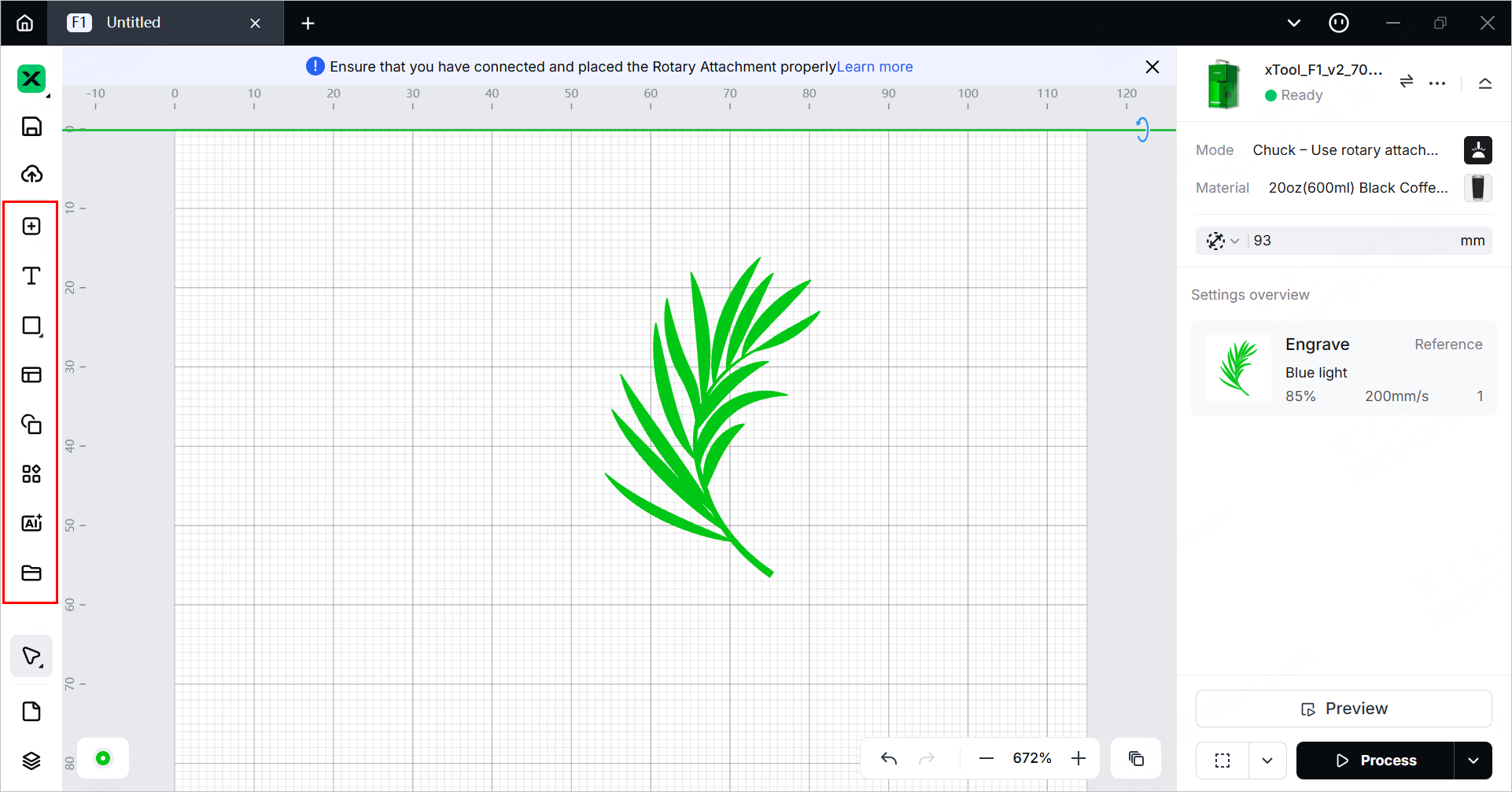
(1) Use the tools on the left side of the canvas to create objects. You can import images, insert shapes, enter text, or draw vector graphics.
Note:
- xTool Studio supports importing the following image formats: SVG, DXF, JPG, JPEG, PNG, BMP, etc.
- The green line on the top of the canvas indicates the starting line of laser processing.
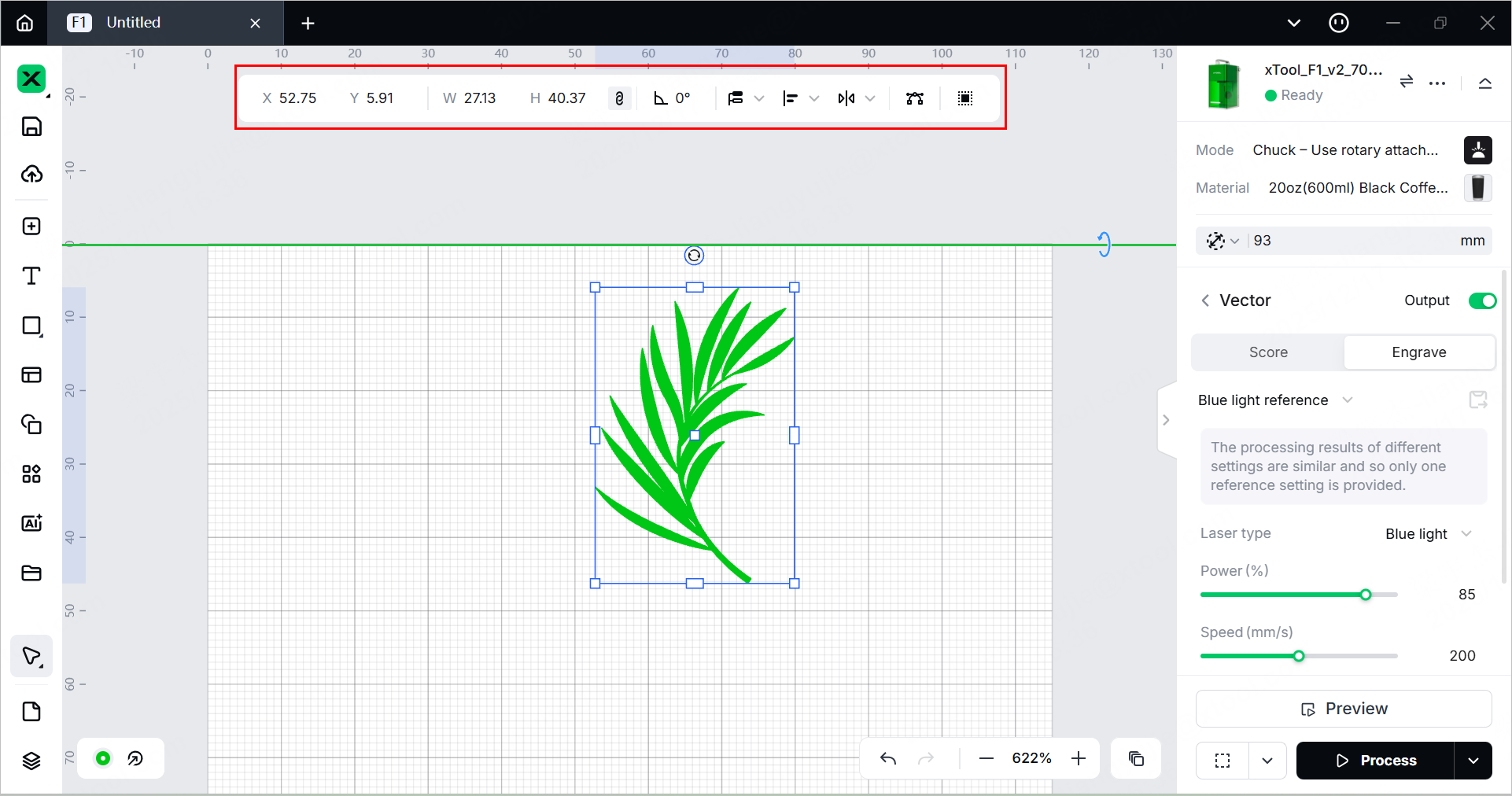
(2) After selecting the objects, use the tools above the canvas for further editing.
6. Set parameters for processing
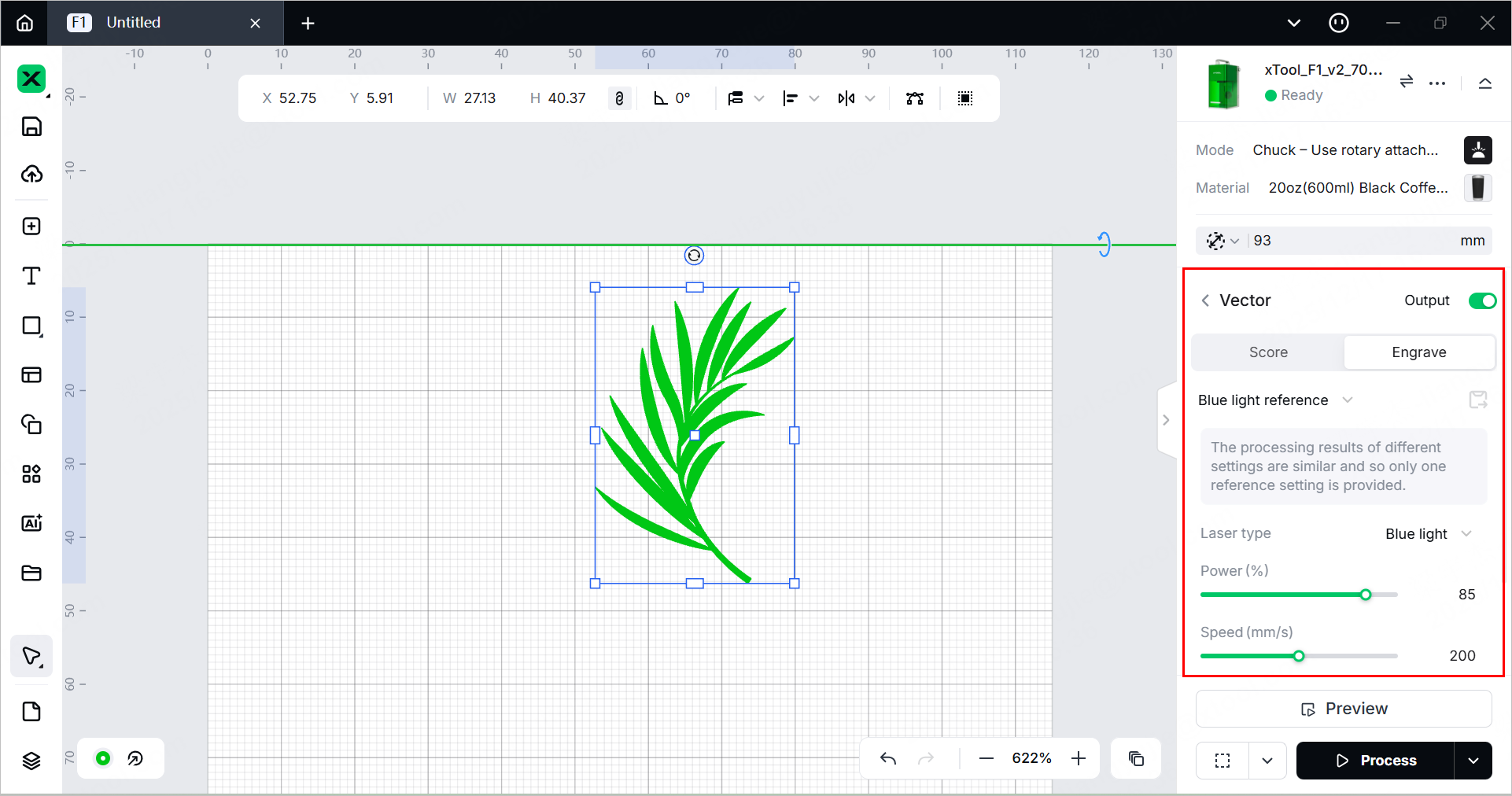
Select objects on the canvas and set their parameters on the right panel.
Note:
- You need to set parameters for every object. A missed object may fail to be processed.
- Parameter options differ between bitmap objects and vector objects. You can select multiple objects of the same type and set parameters for them at once.
Note:
- For xTool F1 Lite, laser type selection is not available, as it has only a blue-light laser.
- For more information on parameter settings, see atomm.com/easyset.
7. Preview the processing area
You can preview the processing area on the material by framing.
Framing refers to laser dots moving along the boundary of the processing objects on the material. Perform the following steps to start framing.
(1) In the bottom-right corner of the software, click next to the Framing button to set parameters for framing.
Note: xTool F1/F1 Lite supports two preview modes: Rect and Outline.
- If you select Rect, you can preview the rectangular border of the processing area.
- If you select Outline, you can preview the outline of the processing objects.
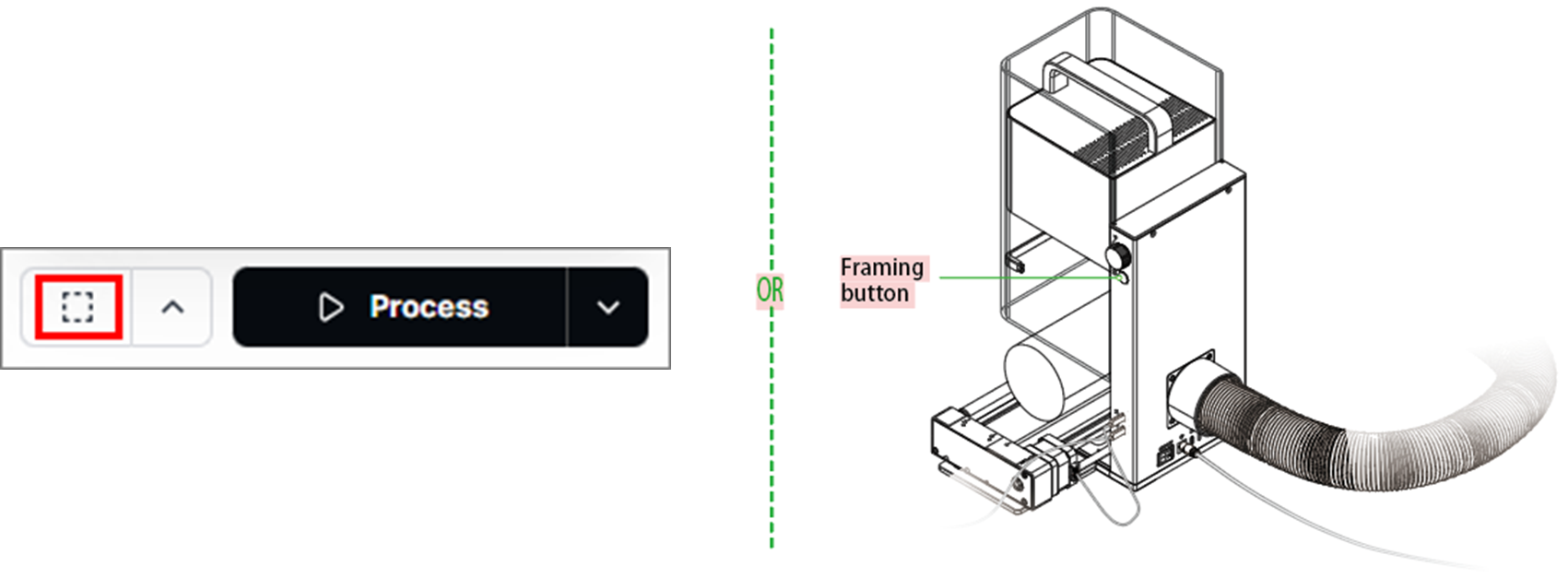
(2) Click the framing button in the software or press the framing button on xTool F1/F1 Lite to start framing. The laser spot will move along the boundary of the processing pattern on the material so that you can preview the processing area.
By default, xTool F1/F1 Lite performs framing for all the elements to be processed. To preview the boundary of one or more particular elements, you can select the elements on the canvas of xTool Studio during framing. The laser spot will move along the boundary of the selected elements, as illustrated by the following pictures.
- Default framing:
- Selected elements framing:
⚠️ Safety Reminder: Before framing, pull down the protective enclosure and wear goggles that can shield laser beams of 455 nm and 1064 nm wavelengths.
Note: To stop framing, press the framing button on xTool F1/F1 Lite.
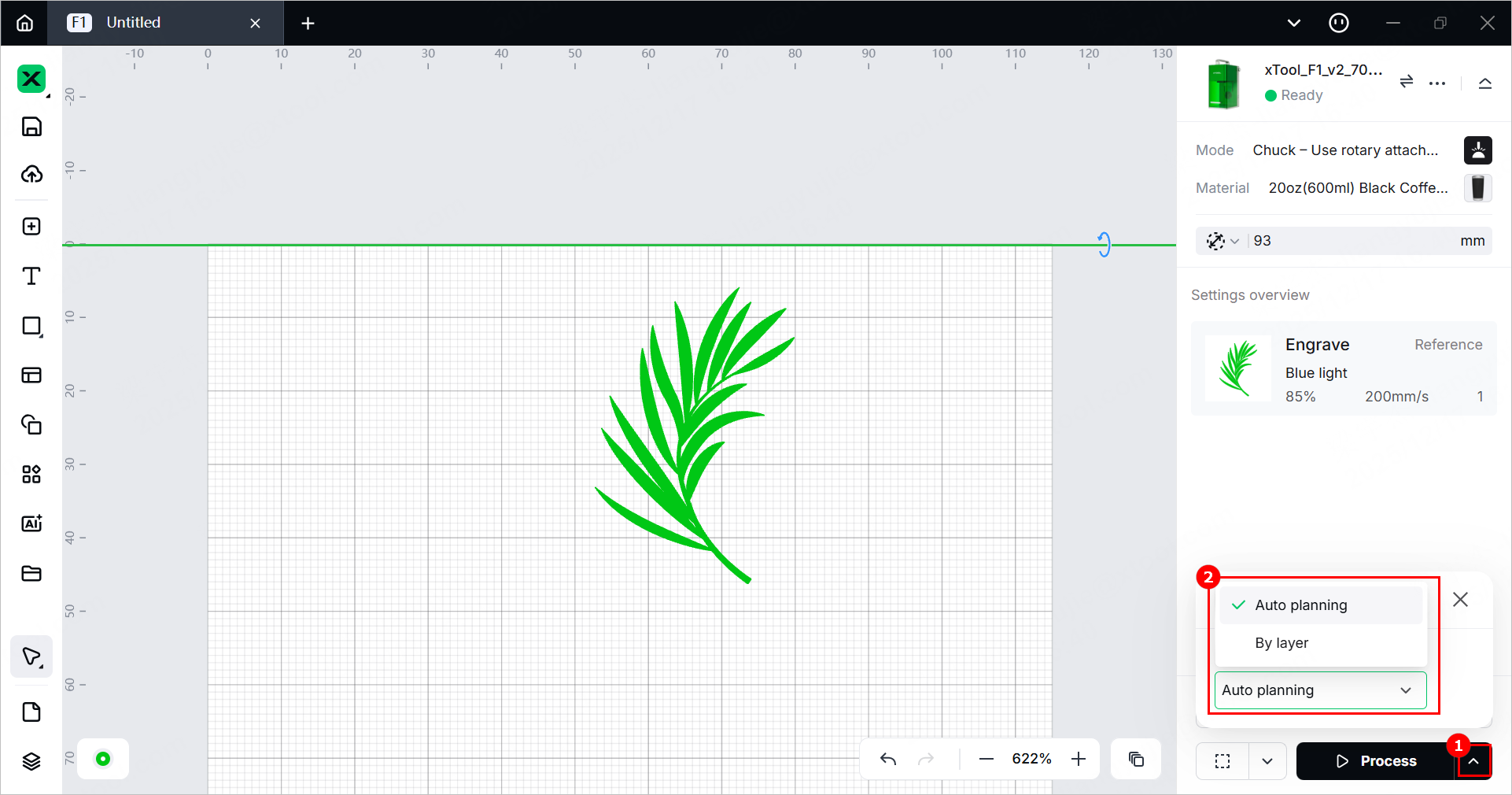
(3) Click in the bottom-right corner and set the processing path for processing.
8. Start processing
💡 In low‑temperature environments, enable the infrared ray preheat function to ensure optimal processing results. If preheat is not enabled, the normal processing sequence may produce unsatisfactory bitmap engraving output due to temperature limitations.
- xTool F1 Lite does not support infrared ray preheat.
(1) In the bottom-right corner of the software, click Process.
(2) Click Preview Processing Path and to preview the processing path.
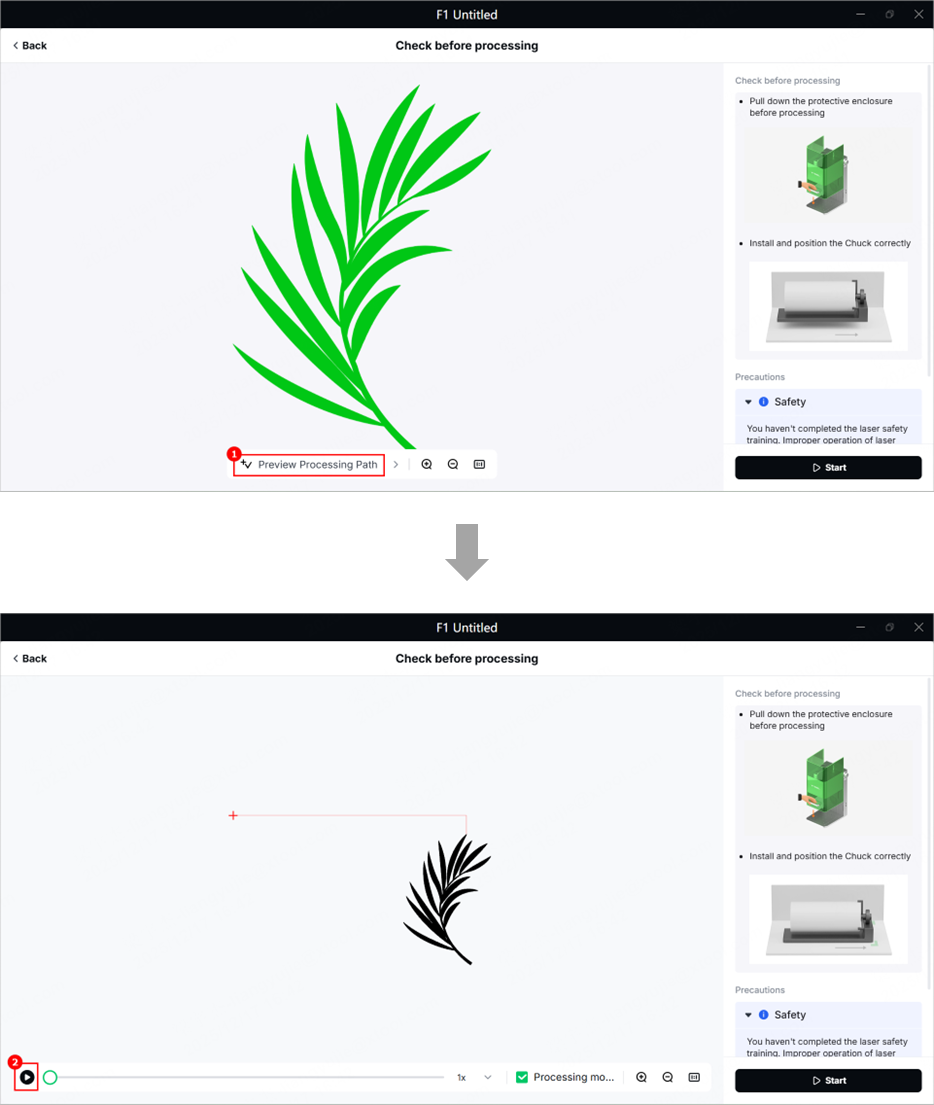
(3) In the bottom-right corner of the software, click Start.
(4) Pull down the protective enclosure, then press the knob on xTool F1/F1 Lite to start processing.
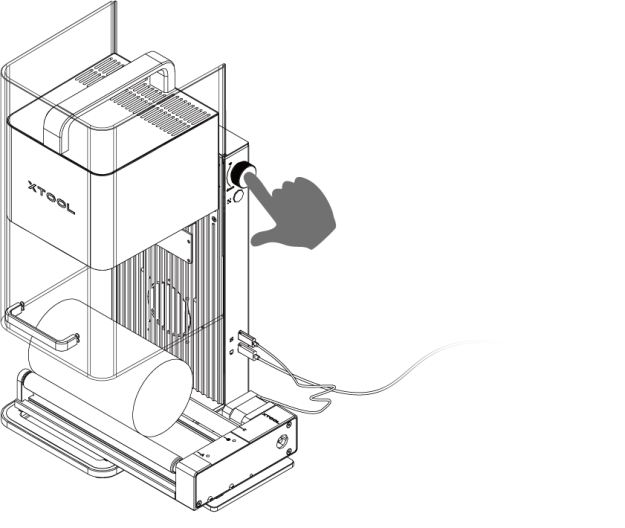
⚠️ Safety Reminder: Before processing, pull down the protective enclosure and wear goggles that can shield laser beams of 455 nm and 1064 nm wavelengths.