1. Hardware
Rotary Attachment Usage Scenarios
Rotary attachments are typically used for processing materials with cylindrical structures or rollable surfaces. They achieve stable clamping and synchronous rotation through different structural designs. The common types are as follows:
1.1 Step Jaw Components Machining Mode
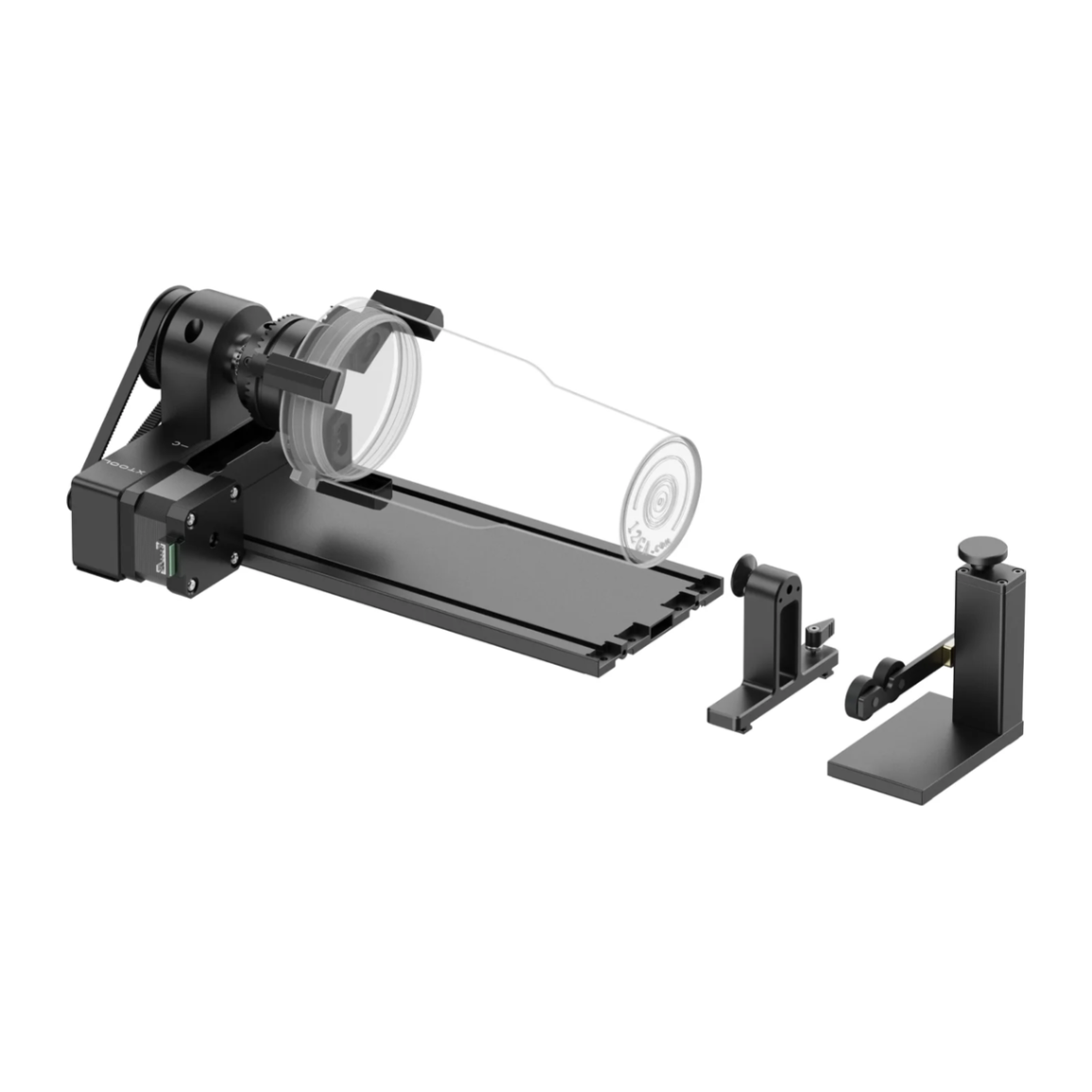
Suitable for:
Tumbler, glass, and other standard cylindrical containers.
Instructions:
Step jaw components from all directions clamp both ends of the workpiece to ensure coaxial rotation.
The step jaw components in all directions expand outward, opening up the interior of the material to achieve a fastening effect and ensure coaxial operation.
Supports 360° pattern engraving.
Advantages:
Firm clamping, suitable for medium to large cylindrical objects.
Note:
When placing the cup body, keep the axis level to avoid material shaking or shifting from the machining position during processing.
1.2 Stud Components Processing Mode
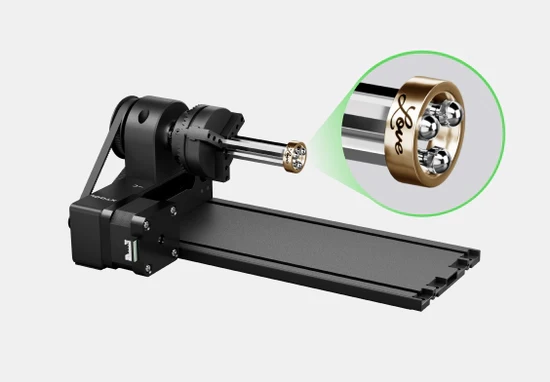
Suitable for:
Small ring-shaped regular objects such as rings and hoops.
Instructions:
Fix the ring to the central stud components by expanding outward.
Combine fine-tuned rotation to achieve precise curved material engraving.
Advantages:
Precision structure, suitable for high-precision machining of small dimensions.
Note:
The ring's central axis must be precisely aligned; otherwise, the pattern may easily shift. Before processing, please use pre-processing to check whether the machining position is offset.
1.3 RA2 Component Processing Mode
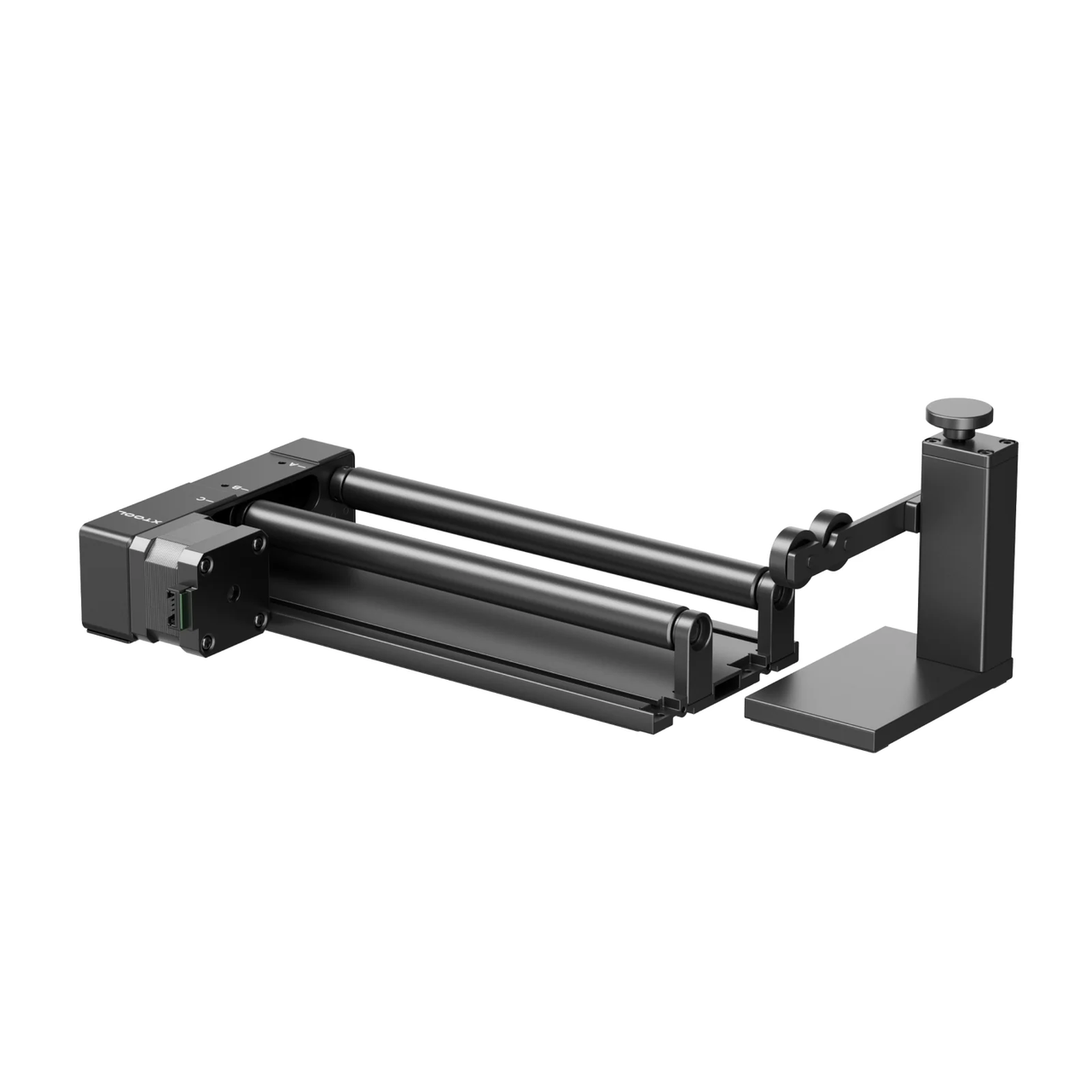
Suitable for:
Cylinders with flat bottoms, such as wine bottles, cup holders, etc.
Instructions:
The material is freely placed on two rollers, achieving synchronous rotation through its own weight and friction.
Suitable for processing lightweight materials without special fixing requirements.
Advantages:
Easy to assemble and disassemble, with wide compatibility.
Note:
It is necessary to prevent uneven rolling or shifting of the material. If uneven rolling or insufficient friction occurs, fit anti-slip rings or similar materials onto both ends of the object to assist in processing.
1.4 Compatible with Rotary Attachment Models
Adapt processing mode: Curved material/Use rotary attachment
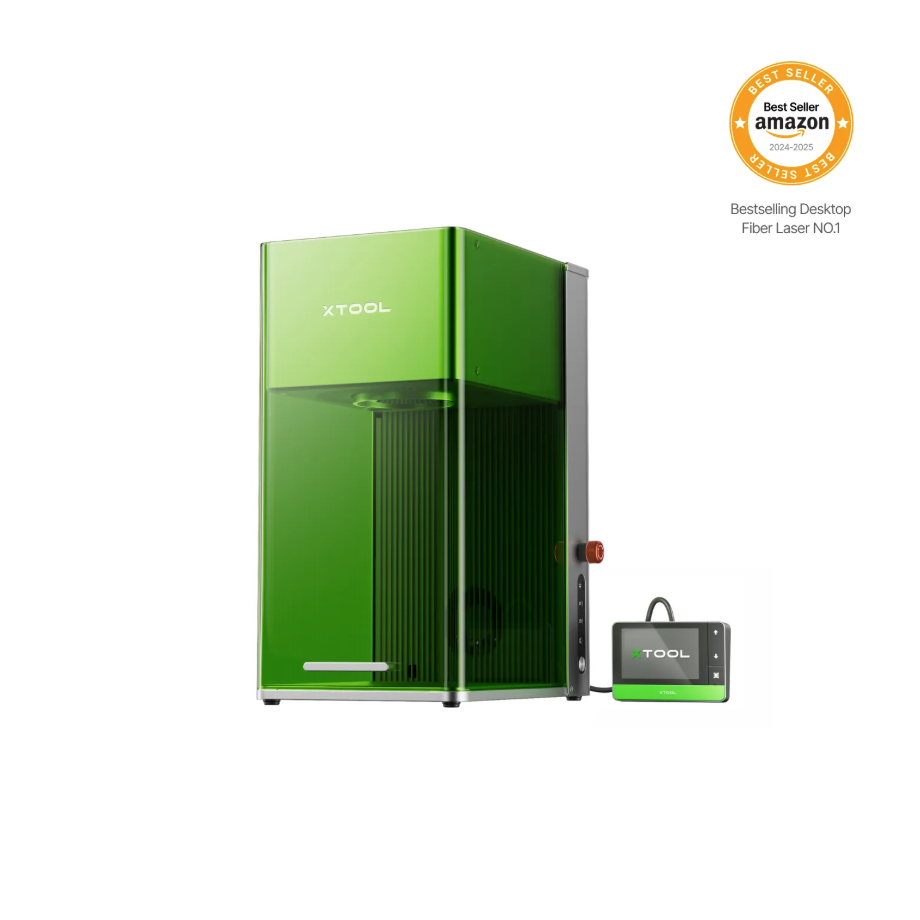
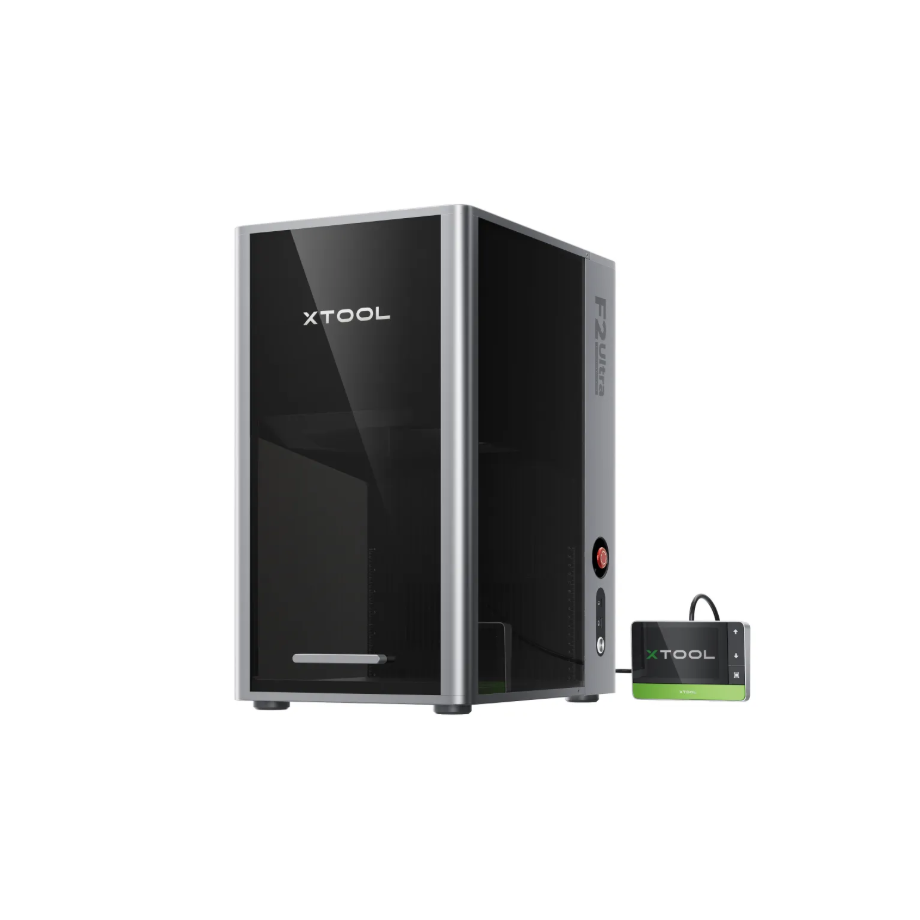
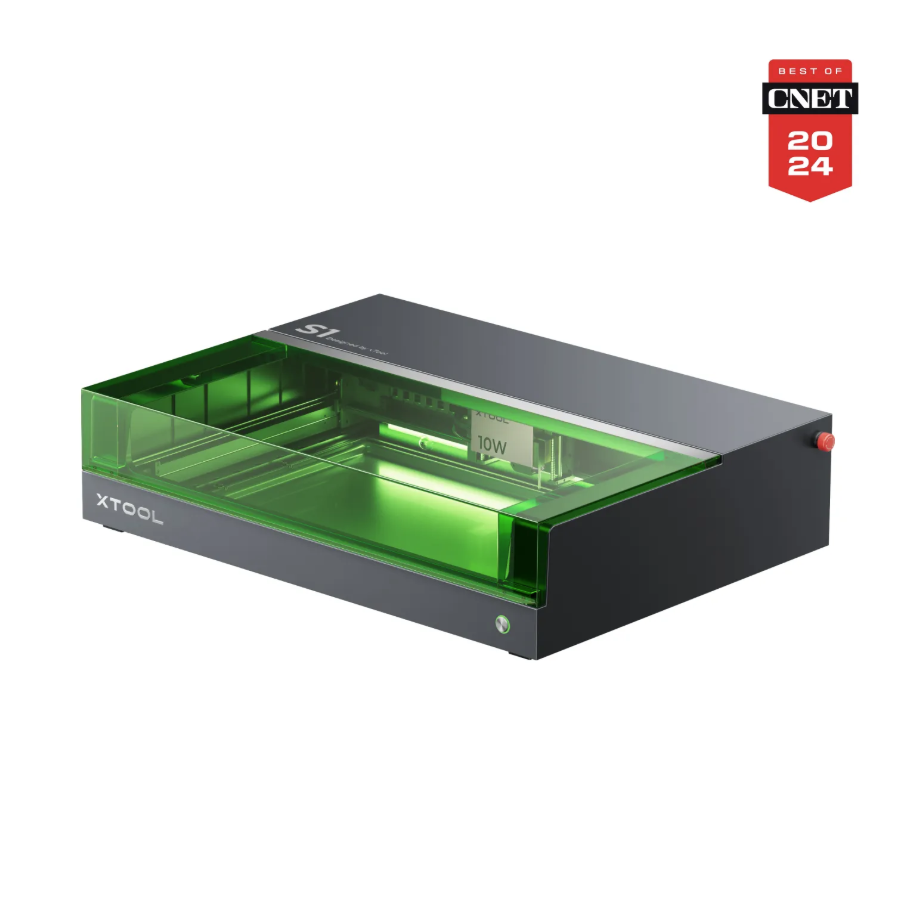
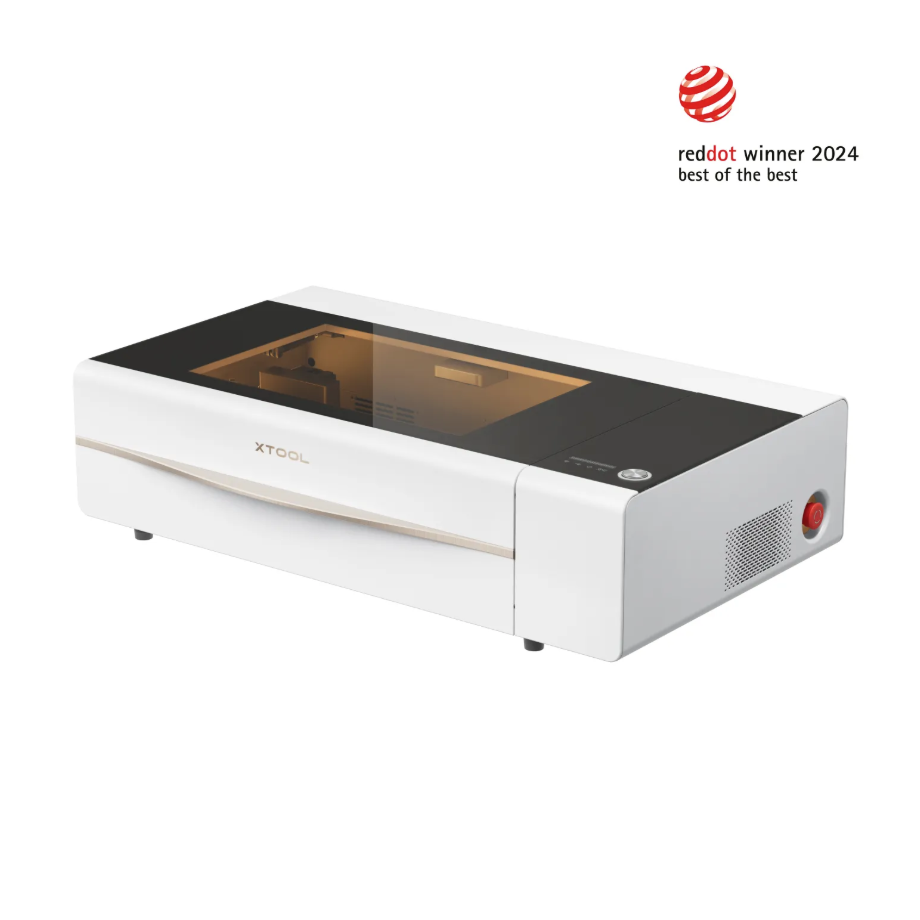
Adapt processing mode: Use rotary attachment
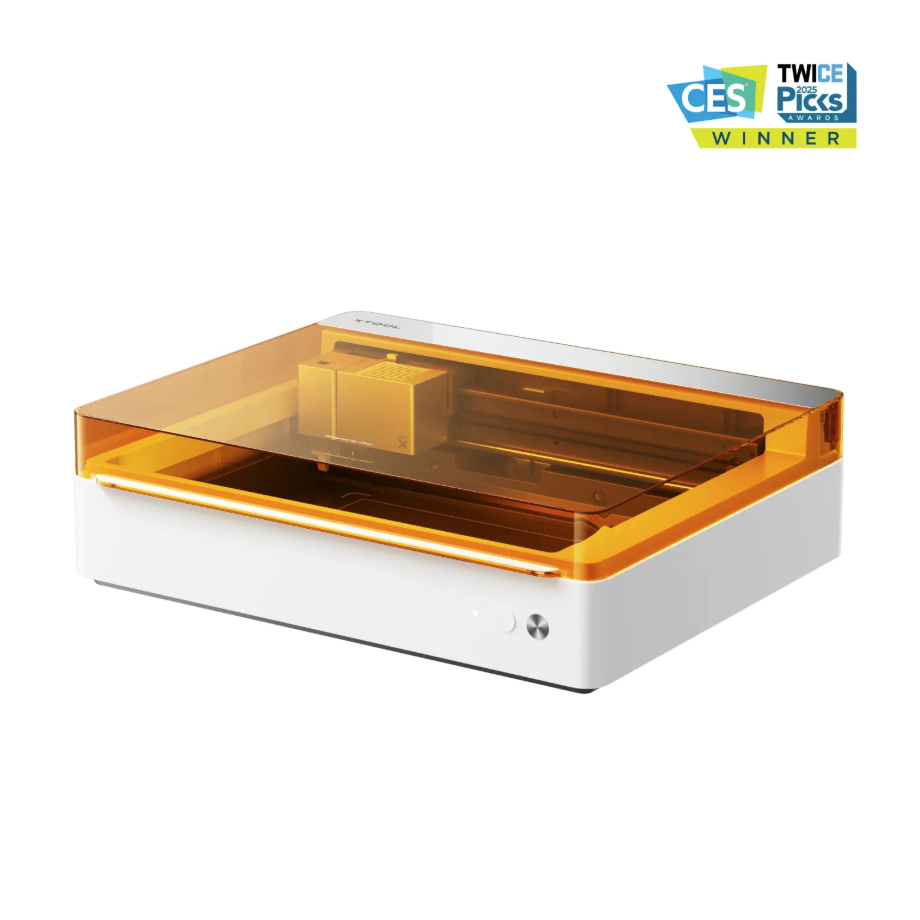
2. Software Category
2.1 Use rotary attachment settings
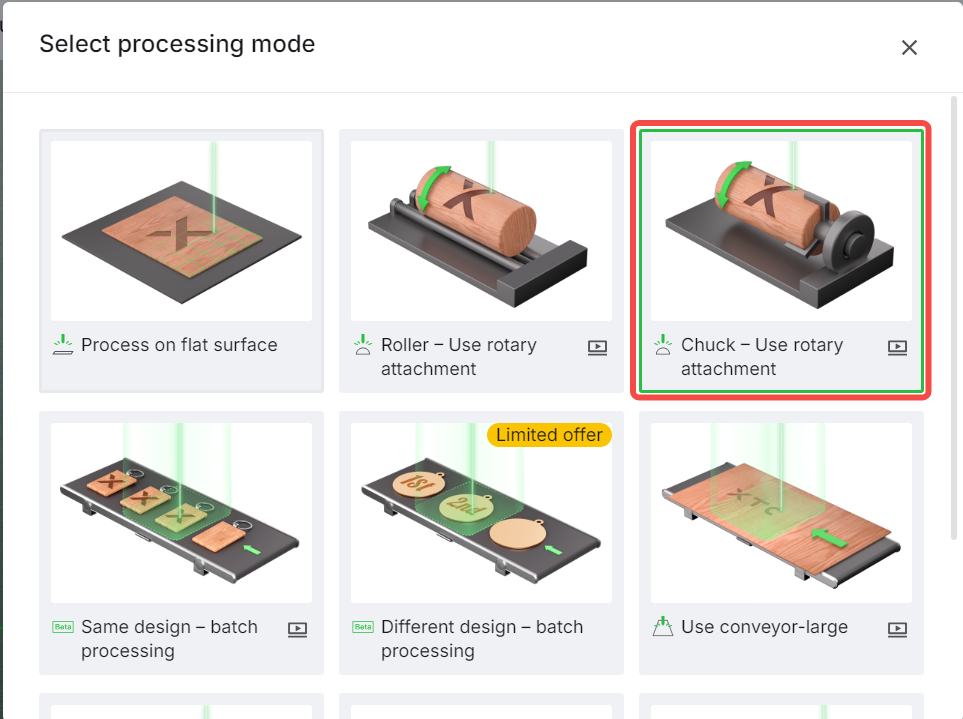
Select 'Use rotary attachment' in processing mode.
Enter the material diameter, and the software will automatically generate the rotation speed ratio based on the circumference.
Ensure that the pattern angle matches the material rotation direction (e.g., clockwise/counterclockwise).
2.2 Curved Material
When the rotary accessory is not connected to the device, it can also be used to secure materials. When processing a tumbler, the rotary accessory can be used to hold the tumbler in place, and then the curved material function can be used to process the tumbler.
3. Frequently Asked Questions
3.1 Use rotary attachment processing direction
Please note the machining rotation direction displayed on the software page when using the rotary attachment to avoid excessive machining amplitude. Changes in the rotation position of parts in the material may cause collisions with the Laser Module, resulting in machining pause or material displacement.
Before processing, please perform a processing preview to check whether the processing direction meets your requirements.
3.2 Material Gripping and Fixing
When using the rotary attachment, you must ensure that the material does not become loose or slip during the processing.
Operation Recommendations:
step jaw components/Stud components fixture:
The step jaw components and stud components of the fixture expand outward or contract inward to achieve the clamping effect on the material.
After clamping, slightly rotate to test for slippage.
It is recommended to use the tumbler material together with the support module to ensure the center is fixed and the material does not shift from the processing position during machining.
Roller Accessories:
The roller assembly consists of two silicone rollers: a fixed roller and an adjustable roller. During operation, the synchronized rotation of the roller shafts drives the material to roll.
Anti-slip rings or sponge sleeves can be added to both ends of the material to increase friction during the roller's rotation.
It is recommended to avoid using the RA2 fixture for materials with a shifted center of gravity.